

Industry News
Buy Dolomite Grinding Mill for Glass and Refractory Materials in India
2026-02-02 14:17:39
We are Liming Heavy Industry, a manufacturer of various types of industrial crushers, such as Raymond Mill, Trapezoidal Mill, Vertical Mill, Ultrafine Mill, Ball Mill, etc.
Our mills can process the following minerals:
limestone, quicklime, kaolin, talc, barite, bentonite, calcium carbonate, dolomite, coal, gypsum, clay, carbon black, slag, cement raw materials, cement clinker, etc.
If you need a mill to process stone or minerals into powder, please feel free to contact me (WhatsApp: +86 153 3380 7511). Thank you.
Precision and Purity: Sourcing Dolomite Grinding Mills for India's High-Grade Glass and Refractory Sectors
_1767930326613.jpg)
The Indian industrial landscape is shifting. Years ago, when I visited processing plants in the industrial belts of Gujarat or the mineral hubs of Rajasthan, the conversation was almost exclusively about "volume." How many tons can we push through? Today, the conversation has matured. Now, the questions are about "purity," "particle distribution," and "energy efficiency."
This shift is nowhere more apparent than in the glass and refractory industries. With India positioning itself as a global manufacturing hub, domestic glass manufacturers (both float glass and container glass) demand dolomite with lower iron content and precise mesh sizes. Similarly, the refractory industry, driven by the steel sector, requires high-density dolomite powder that can withstand extreme thermal shock.
As a specialist in non-metallic mineral processing, I often see plant owners struggle with a critical bottleneck: they have access to high-grade raw dolomite mines, but their processing equipment degrades the material or consumes so much power that the margins evaporate. If you are looking to upgrade your facility or establish a new line in India, the choice of grinding mill is the single most significant decision you will make.
In this article, I will analyze the specific requirements of the glass and refractory markets and explain why I consistently recommend Liming Heavy Industry's grinding solutions—specifically the MTW European Trapezium Mill and the LM Vertical Roller Mill—to my clients who are serious about quality.
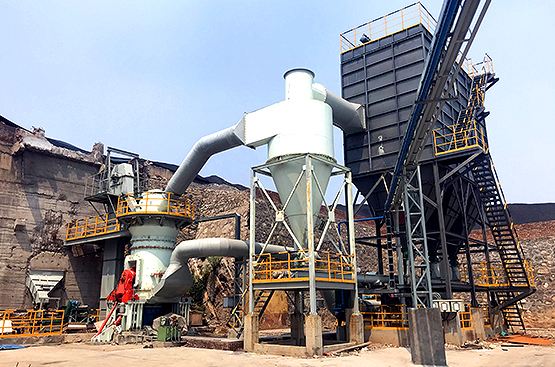
The Glass Industry Challenge: Iron and Consistency
For the glass industry, dolomite acts as a stabilizer. It improves the durability of the glass and its resistance to chemical attack. However, the enemy of glass is iron (). Iron turns glass green. If your grinding mill wears down quickly, that metal dust ends up in your powder, and your product is rejected by premium glass buyers.
Traditional ball mills or outdated pendulum mills grind by brute force, often leading to high wear rates and subsequent contamination. Furthermore, glass manufacturing requires a fairly narrow particle size distribution—typically between 30 mesh and 120 mesh. You don't want too much "fines" (dust), which can clog furnaces, nor do you want coarse particles that don't melt.
The Refractory Industry Challenge: Density and Hardness
Refractory applications often use "dead-burned" or calcined dolomite. This material is significantly harder and more abrasive than raw dolomite. Grinding calcined dolomite requires a machine with high crushing pressure and robust wear parts. A standard agricultural mill will simply vibrate itself to pieces or require roller replacements every few weeks when facing this material.
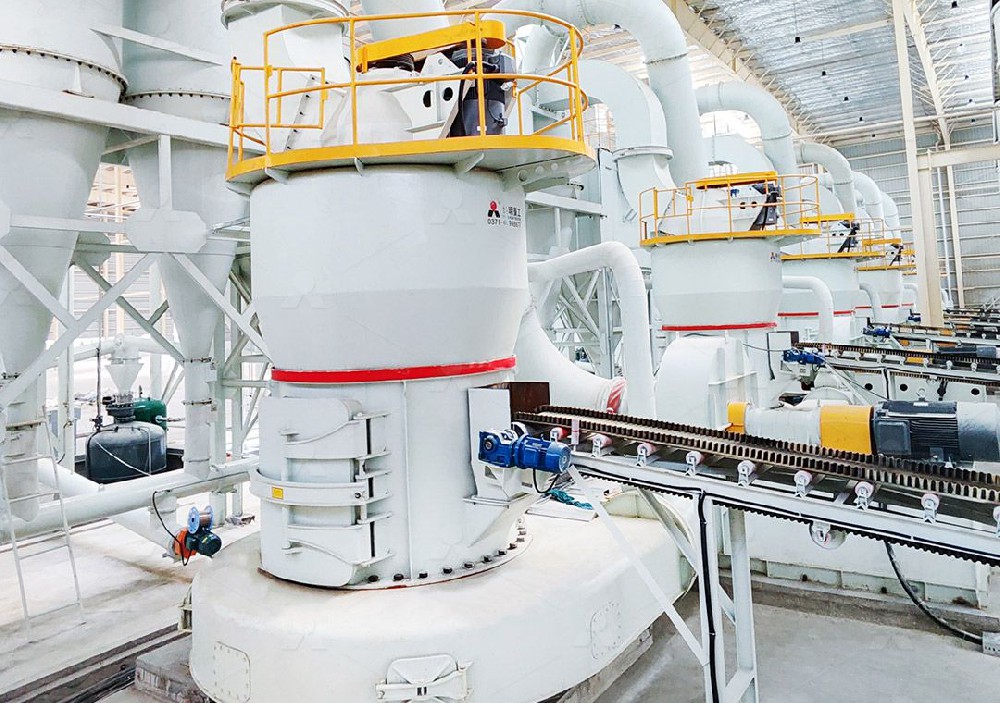
The Strategic Solution: Liming Heavy Industry Technologies
Why do I back Liming? Because in a market flooded with generic machinery, Liming provides "engineered reliability." They have adapted their European-style designs to withstand the rigorous operating conditions often found in India, such as high ambient temperatures and dusty environments.
1. For High Purity and Medium Scale: The MTW European Trapezium Mill
If you are a supplier targeting the glass industry with a production requirement of 3 to 15 tons per hour, the MTW Series is your best strategic asset.
The "Low Iron" Advantage: unlike older mills where the grinding roller assembly is a complex mess of bearings and oil seals exposed to the grinding zone, the MTW uses a streamlined, integral drive. More importantly, for glass clients, we can configure the grinding rollers and rings with specialized high-chrome alloys that have exceptional wear resistance. Less wear means less iron contamination.
Precision Sizing: The MTW is equipped with a cage-type separator (classifier). This is a game-changer for glass grade dolomite. You can adjust the rotor speed to cut off the particle size exactly where the client wants it. If the glass factory demands "nothing coarser than 80 mesh," you can guarantee that specification without using inefficient external vibrating screens.
Operational Cost: The MTW uses a bevel gear drive rather than a belt drive. It's more compact and transmits power more efficiently. In India, where power tariffs vary by state, saving 15% on your energy bill directly improves your bottom line.
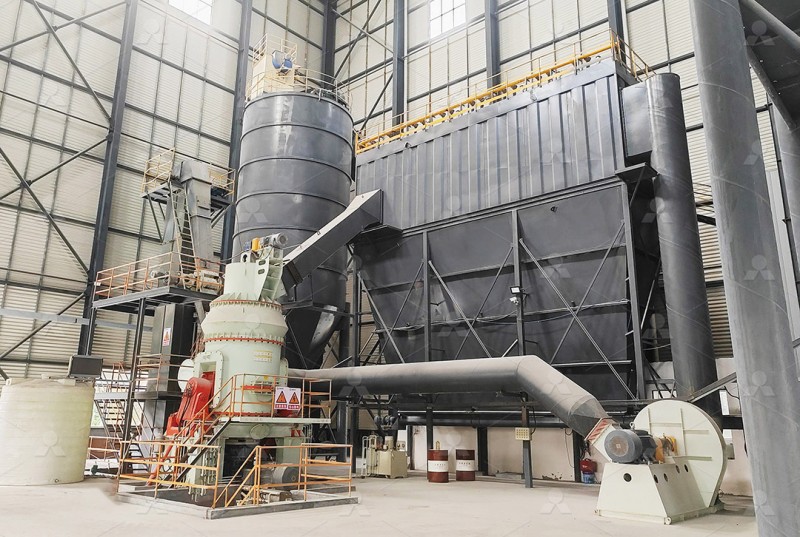
2. For High Volume and Refractories: The LM Vertical Roller Mill (VRM)
If you are supplying major refractory brick manufacturers or large-scale float glass plants, you need scale. You are likely looking at 20, 50, or even 80 tons per hour. At this level, the Vertical Roller Mill (VRM) is the only logical choice.
Handling Hard Materials: The LM Series uses a hydraulic pressure system to press the rollers against the rotating table. This allows it to crush hard, calcined dolomite efficiently. The pressure can be adjusted automatically during operation. If the material hardness fluctuates (which happens in mining), the automation system compensates, protecting the gearbox and ensuring consistent output.
The Drying Factor: Raw dolomite often contains moisture. In the monsoon season, this is a nightmare for ball mills. The LM Vertical Mill introduces hot gas directly into the mill. It dries the stone while grinding it. This eliminates the need for a separate rotary dryer, saving you massive amounts of capital expenditure and fuel costs.
Space Efficiency: In industrial zones where land prices are rising, the VRM is superior. It integrates crushing, grinding, classifying, and drying in one vertical tower. It occupies roughly 50% of the footprint of a comparable ball mill circuit.
Why the Indian Market Trusts Liming
Hardware is only half the story. The reason Liming has gained traction in India over the last decade is support. When you run a continuous process plant, downtime is the enemy.
_1761355701097.jpg)
Liming has established a localized service philosophy. They understand that waiting weeks for a spare part from overseas is not an option. They utilize high-manganese steel and specialized alloys for their wear parts, ensuring that the service life is extended even when processing abrasive dolomite.
Furthermore, their systems are "Turnkey." They don't just sell the mill. They engineer the dust collection (Pulse Jet filters) which is critical for meeting the Pollution Control Board (PCB) norms in India. They design the pneumatic conveying and the packing systems. This holistic approach prevents the common headache of integrating mismatched equipment from different vendors.
Making the Decision
Here is my professional advice: Do not buy a mill based solely on the lowest upfront price tag. I have seen too many "cheap" mills in India sitting idle because they couldn't handle the hardness of the stone or because the bearings failed within months.
If you are producing high-quality dolomite powder for glass and refractories, you are selling a premium product. You need a premium machine to produce it.
For versatility and purity in the 5-20 TPH range, choose the Liming MTW Raymond Mill. For high-capacity, heavy-duty refractory or large glass applications, invest in the Liming LM Vertical Roller Mill.
Invest in technology that protects your reputation.
_1761355927036.jpg)
Frequently Asked Questions (FAQ)
1. How do you prevent iron contamination for glass-grade dolomite?
Iron contamination comes from the wear of grinding parts. We minimize this in two ways: First, the Liming MTW and LM mills are designed with high-efficiency grinding curves that grind material faster, reducing the contact time and wear per ton. Second, we can equip the mills with specialized wear-resistant alloy liners and rollers. For extreme purity requirements, we can discuss ceramic or specialized liners, though high-quality alloy is usually sufficient for standard glass grade.
2. Can the mill handle calcined (burnt) dolomite for refractories?
Yes. Calcined dolomite is harder than raw dolomite. The Liming LM Vertical Roller Mill is specifically designed for this. Its hydraulic loading system provides the high crushing pressure needed to pulverize hard materials efficiently without excessive vibration.
3. What is the finest mesh size these mills can achieve?
Both the MTW and LM series are equipped with dynamic air classifiers. They can generally produce powders ranging from 80 mesh down to 400 mesh (38 microns) easily. For most glass applications (typically 30-100 mesh) and refractory applications (varies), the machine is easily adjustable via the control panel.
4. Does Liming provide support for installation in India?
Absolutely. Liming Heavy Industry provides full installation and commissioning services. We dispatch experienced engineers to your site to guide the foundation construction, oversee the assembly, and most importantly, train your local operators on how to maximize the machine's efficiency.
5. How does the machine handle the Indian monsoon (high moisture)?
The LM Vertical Roller Mill is excellent for this. It has an integrated drying function. By introducing hot air into the mill, it can handle raw material with moisture content up to 15% (or more with specialized auxiliary heat), ensuring the final powder is dry and free-flowing regardless of the weather outside.
_1761361296294.jpg)
6. What is the power consumption per ton?
While this depends on the hardness of your specific dolomite and the fineness required, the LM Vertical Mill generally consumes 30% to 40% less energy than a traditional ball mill system. The MTW mill also features low energy consumption due to its efficient bevel gear drive system and internal airflow design.
7. Are spare parts readily available?
Yes. We understand that uptime is critical. Liming recommends a spare parts inventory package upon purchase, and we have a robust logistics network to supply consumables like rollers, rings, and classifier blades to Indian clients promptly.
8. Can I produce different grades of powder with one machine?
Yes. This is a major advantage over fixed-screen hammer mills. With Liming's air classification system, you can switch from producing 80 mesh product to 200 mesh product simply by adjusting the classifier speed and airflow parameters on the PLC control system. No mechanical changes are required.
9. How do you handle dust control?
Environmental regulations in India are strict. Our systems operate under negative pressure, meaning no dust escapes the machine. We include high-efficiency Pulse-Jet Bag Filters that capture 99.9% of the dust, keeping your plant clean and compliant with Pollution Control Board standards.
10. What is the footprint of the equipment?
The LM Vertical Mill has a very small footprint because it dries, grinds, and classifies vertically. It requires about 50-60% of the land area of a ball mill system. The MTW is also compact with its integrated drive system, making it suitable for retrofitting into existing factory sheds.


