

Industry News
Talc Grinding Mill Review for Industrial Paints and Coatings in Malaysia
2026-01-29 13:06:03
We are Liming Heavy Industry, a manufacturer of various types of industrial crushers, such as Raymond Mill, Trapezoidal Mill, Vertical Mill, Ultrafine Mill, Ball Mill, etc.
Our mills can process the following minerals:
limestone, quicklime, kaolin, talc, barite, bentonite, calcium carbonate, dolomite, coal, gypsum, clay, carbon black, slag, cement raw materials, cement clinker, etc.
If you need a mill to process stone or minerals into powder, please feel free to contact me (WhatsApp: +86 153 3380 7511). Thank you.

Field Review: Elevating Talc Processing for Malaysia's Paint and Coating Sector
Having spent years on the ground in the industrial corridors of Selangor and Johor, I have seen firsthand how the right grinding technology can make or break a production line. In Malaysia's competitive industrial coatings market, talc (hydrated magnesium silicate) is a critical ingredient. Its lamellar, plate-like structure is what gives premium marine primers their corrosion resistance and architectural paints their smooth flow. But here is the catch: if you over-grind and destroy those plates, or if you introduce iron contamination, your "high-grade" talc becomes just another cheap filler.
_1767930326611.jpg)
I have benchmarked dozens of mills in the humidity of Southeast Asia. When it comes to striking the balance between particle size distribution (PSD), whiteness retention, and energy cost, Liming Heavy Industry remains the name that consistently tops my list. Whether you are a small-scale batch producer or a large-scale industrial supplier, their Raymond and Vertical Roller Mills offer specific engineering advantages that are hard to ignore.
The Versatile Choice: MTW European Type Raymond Mill
For many local Malaysian factories processing talc for decorative paints or wood lacquers, the MTW Series Raymond Mill is the "sweet spot." Traditional Raymond mills are often criticized for being "old tech," but Liming's MTW series is a different beast entirely. It uses a bevel gear integral transmission, which is much more efficient than the old belt-driven systems found in generic machines.
_1761355927036.jpg)
Talc is a soft mineral (Mohs 1), which means it's easy to grind but also easy to "mess up." The MTW's air-recycling system is particularly effective here. It allows for precise control of the internal temperature, which is vital because talc's oil absorption—a key metric for paint manufacturers—can be negatively affected by excessive heat during the milling process. The fineness can be adjusted between 80 to 425 mesh with extreme consistency, ensuring that the talc reinforces the paint film without causing "grit" in the final application.
The Industrial Powerhouse: LM Vertical Roller Mill (VRM)
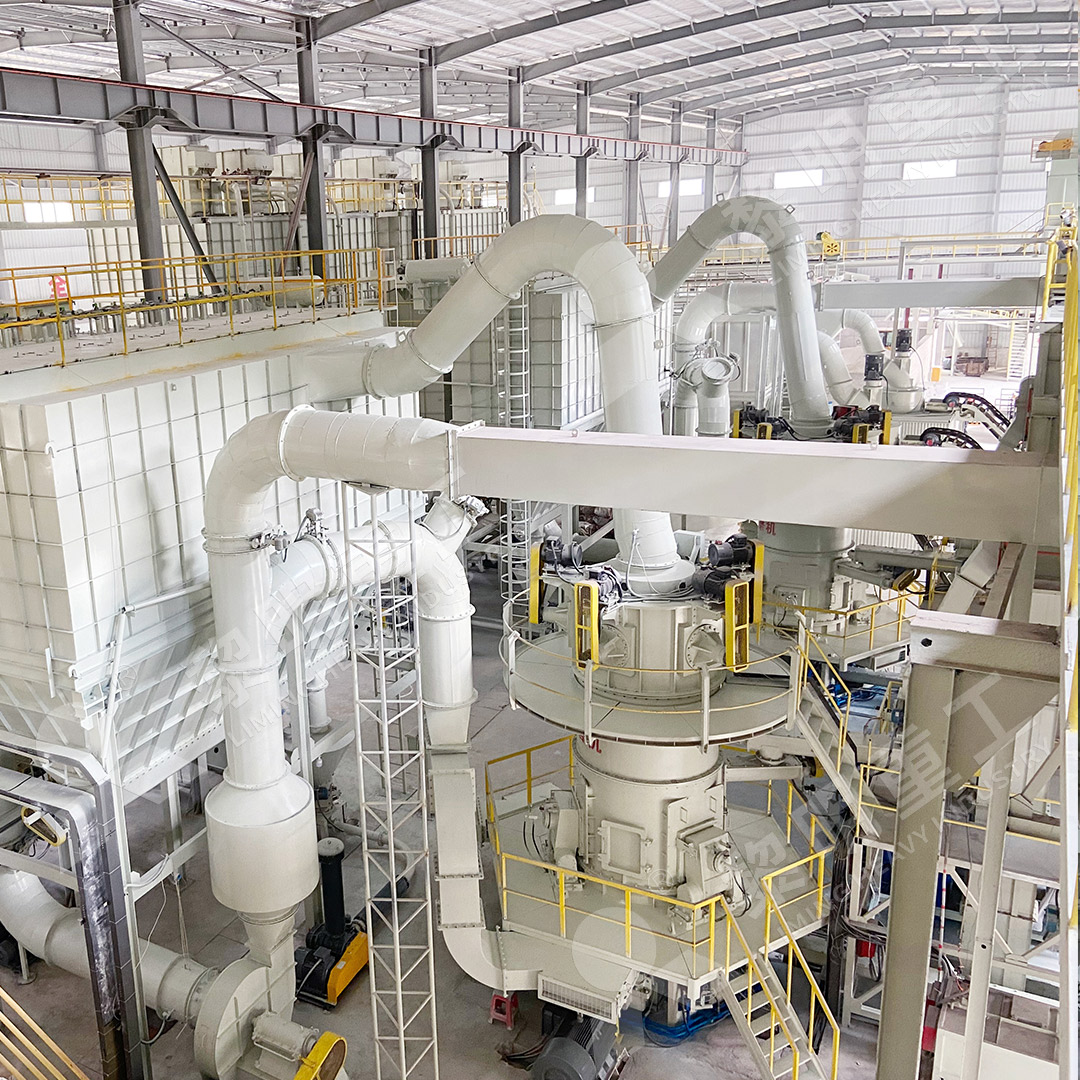
When the conversation shifts to high-spec industrial coatings—like those used in Malaysia's automotive or electronics sectors—the requirements change. You need ultrafine powder (often 800 to 1250 mesh and beyond) and you need it in massive quantities. This is where the LM Vertical Roller Mill outshines the competition.
From a design standpoint, the VRM is superior because it uses a material bed grinding principle. The rollers don't actually touch the grinding table; instead, they crush the talc against itself. This is a game-changer for whiteness. In the paint industry, "L-value" (whiteness) is everything. Because there is minimal metal-to-metal contact, iron contamination is virtually non-existent, and the talc retains its natural, brilliant white hue. Furthermore, the integrated classifier in the LM series allows you to switch between product grades on the fly, a flexibility that traditional mills simply can't match.
Regional Adaptation: Performance in Malaysia's Climate
One thing I always emphasize to my clients in the Klang Valley is the "Humidity Factor." High moisture in the air can cause fine talc powder to clump or stick to the internal components of a mill. Liming's mills address this with a negative pressure system that keeps the environment inside the mill dry and dust-free. The pulse dust collection system is standard, ensuring that your facility remains compliant with local DOE (Department of Environment) air quality standards without requiring expensive aftermarket upgrades.
Summary of Technical Advantages
Choosing between these two depends on your specific business model:
Investment Scale: The MTW Raymond Mill offers a lower initial capital requirement, making it ideal for regional suppliers or new market entrants.
Quality of Output: For "ultrafine" grades and maximum whiteness, the LM Vertical Roller Mill is the superior engineering choice.
Operational Cost: The LM series offers roughly 30% better energy efficiency per ton of powder produced, which is significant given the current industrial electricity tariffs in Malaysia.
_1761361296294.jpg)
Frequently Asked Questions (FAQ)
1. What is the best fineness for talc used in Malaysian architectural paints?
Typically, a D97 of 325 mesh (45 microns) is the industry standard for general house paints. Both the MTW Raymond Mill and LM Vertical Mill can achieve this easily.
2. How does the mill prevent iron contamination during grinding?
The LM Vertical Roller Mill uses a "material bed" grinding technique where the rollers don't touch the table. Additionally, Liming uses high-performance alloy wear parts that minimize metallic shedding into the powder.
3. Can I produce 1250 mesh talc for automotive primers with these mills?
Yes, the LM series (especially the LUM ultrafine version) is specifically designed to reach 1250 to 2500 mesh while maintaining the lamellar structure of the talc particles.
4. Is a separate dryer needed for talc processing in Malaysia?
Usually, no. The LM Vertical Roller Mill has an integrated drying function that can handle raw material moisture by introducing hot air directly into the milling chamber.
5. What is the typical maintenance schedule for a Raymond Mill?
Standard wear parts like rollers and rings usually need inspection every 3-4 months when processing talc. Liming's MTW series features easy-access ports that reduce maintenance downtime by about 20%.
_1761355701097.jpg)
6. How does the equipment handle the strict environmental regulations in Malaysia?
The systems operate under negative pressure to prevent dust leakage. The pulse bag filter system ensures that exhaust air meets the ≤30mg/m³ emission standards often required by the Malaysian DOE.
7. Are spare parts for Liming mills available in Malaysia?
Yes, Liming has a established service network in Southeast Asia. Common wear parts are often stocked locally or can be shipped quickly from their regional hubs.
8. Why is "lamellar structure" so important in my talc powder?
The plate-like (lamellar) structure provides a "barrier effect" in paint, making it harder for moisture to reach the substrate. High-quality mills like the LM series grind gently enough to preserve these plates.
9. What is the power requirement for an MTW138 Raymond Mill?
The main motor is typically around 90kW-110kW, but this can vary based on your specific output and fineness targets.
10. Does Liming provide turnkey installation for new plants?
Absolutely. They provide everything from foundation drawings and site layout to on-site commissioning and operator training for your Malaysian staff.


