

Industry News
How to Process Barite Powder for Oil Drilling Mud
2025-12-29 08:50:55
We are Liming Heavy Industry, a manufacturer of various types of industrial crushers, such as Raymond Mill, Trapezoidal Mill, Vertical Mill, Ultrafine Mill, Ball Mill, etc.
Our mills can process the following minerals:
limestone, quicklime, kaolin, talc, barite, bentonite, calcium carbonate, dolomite, coal, gypsum, clay, carbon black, slag, cement raw materials, cement clinker, etc.
If you need a mill to process stone or minerals into powder, please feel free to contact me (WhatsApp: +86 153 3380 7511). Thank you.
Barite powder is an essential component in oil drilling mud, widely used to control formation pressure, stabilize wellbores, and ensure safe drilling operations. In oil-producing regions around the world, including the Middle East, North America, and parts of Asia, the quality of barite powder directly affects drilling efficiency and safety. Proper processing of barite, from raw ore to drilling-grade powder, requires a well-designed grinding system that delivers consistent fineness, high purity, and reliable output. Understanding the processing steps and selecting suitable grinding equipment are key factors in producing high-quality barite powder for oil drilling mud.

Role of Barite in Drilling Mud
Drilling mud is a complex fluid used during oil and gas drilling to cool the drill bit, carry cuttings to the surface, and maintain pressure control within the well. Barite is added as a weighting agent because of its high specific gravity and chemical inertness. When ground to the correct fineness, barite increases mud density without significantly altering viscosity or flow characteristics.
For drilling applications, barite powder must meet strict industry requirements. These typically include specific gravity standards, limits on soluble alkaline earth metals, and controlled particle size distribution. Uniform grinding ensures the barite remains suspended in the mud and performs consistently under high-pressure downhole conditions.
Raw Barite Preparation
The barite processing workflow begins with raw ore preparation. Barite ore is usually mined from open-pit or underground deposits and delivered to the processing plant in lump form. Before grinding, the raw material must be prepared to ensure stable mill operation and consistent product quality.
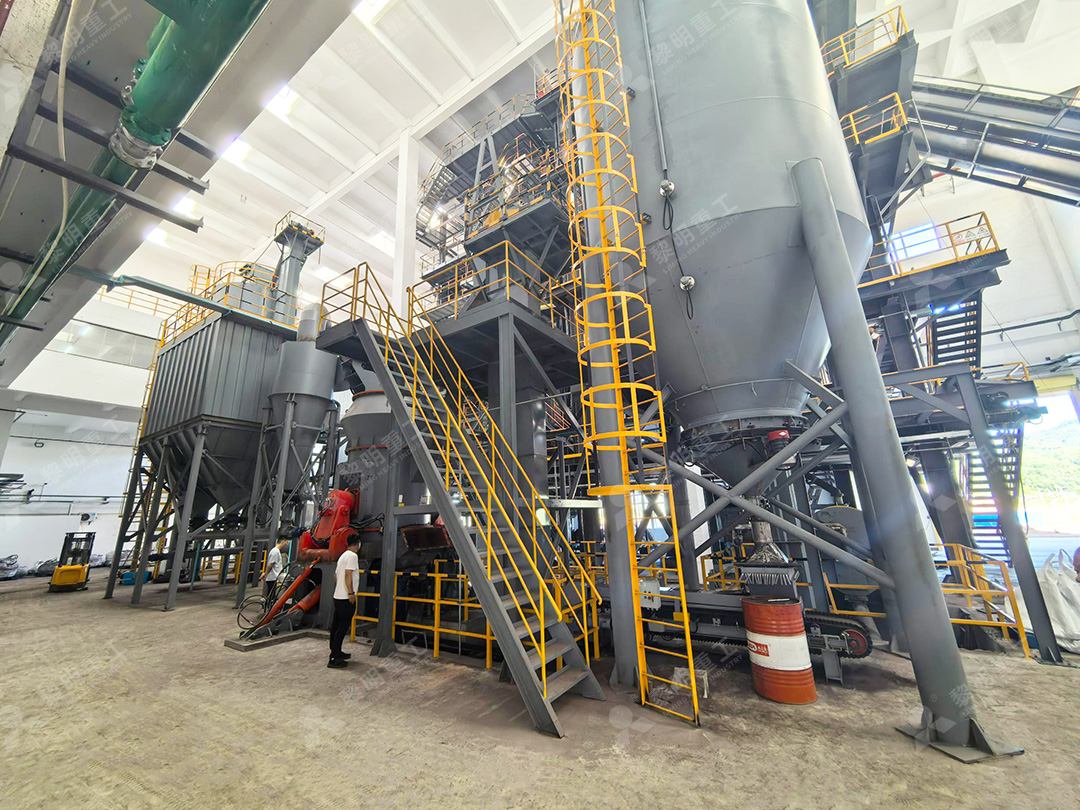
Crushing: Large barite lumps are reduced to a suitable feed size using jaw crushers or impact crushers.
Screening: Crushed material is screened to remove oversized particles and ensure uniform feed to the grinding mill.
Drying: If the barite contains excessive moisture, drying is required to prevent mill instability and reduce energy loss during grinding.
Proper preparation improves grinding efficiency, reduces wear on equipment, and helps maintain stable output quality.
Grinding Requirements for Oil Drilling Barite
Barite used in drilling mud is commonly ground to fineness levels between 200 and 325 mesh, though some applications may require even finer powder. Achieving this fineness consistently is critical, as oversized particles can settle out of the mud, while excessive fines may increase fluid viscosity.

An effective barite grinding system must deliver:
Precise control of final particle size
Stable continuous operation
Low energy consumption per ton
Durable components resistant to abrasion
Raymond Mill for Barite Powder Processing
The Raymond mill is a widely used solution for grinding barite into fine powder for oil drilling mud. Its proven design and operational stability make it suitable for small to medium-scale barite processing plants.
Grinding Principle
The Raymond mill operates using grinding rollers that apply pressure against a rotating grinding ring. As barite material enters the grinding chamber, it is crushed and ground into fine particles. An integrated classifier separates qualified powder from oversized material, which is returned for further grinding.
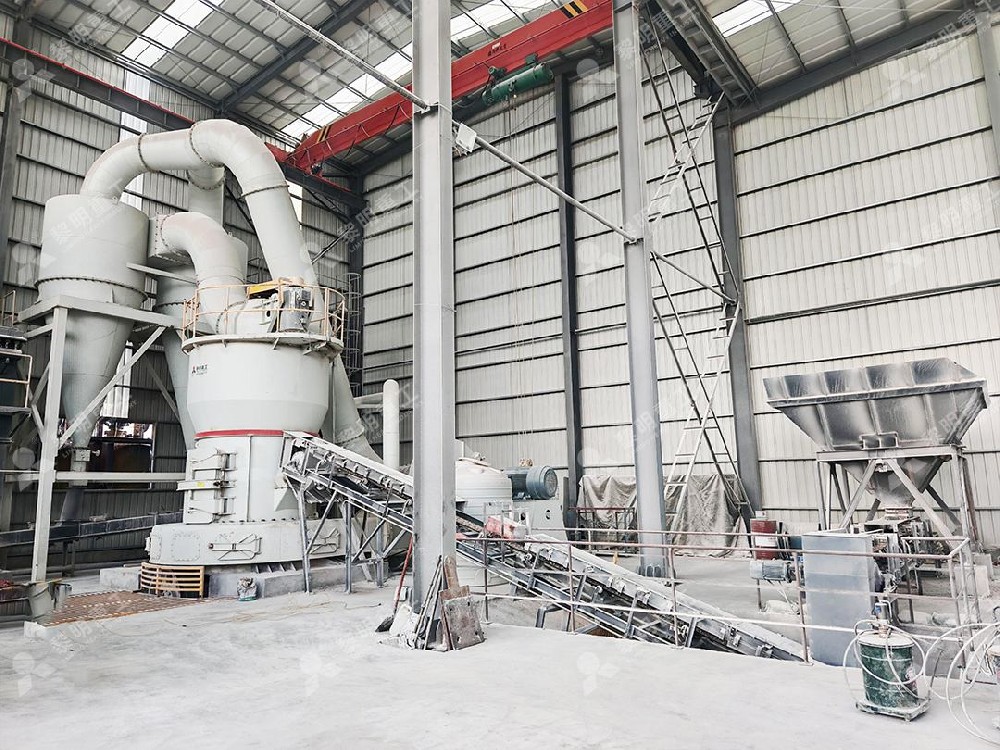
Advantages in Barite Processing
The Raymond mill offers reliable fineness control, allowing operators to adjust output to meet drilling-grade specifications. Its relatively low power consumption and simple mechanical structure help reduce operating and maintenance costs. For producers supplying regional drilling fluid markets, the Raymond mill provides a practical balance between investment cost and performance.
Vertical Mill for Large-Scale Barite Grinding
For barite producers targeting high output and long-term scalability, the vertical grinding mill offers advanced processing capability. Vertical mills integrate multiple functions, including grinding, classification, and conveying, into a single compact system.
High Efficiency and Capacity
Vertical mills grind barite by applying high pressure between rollers and a rotating table. This grinding mechanism achieves efficient size reduction while maintaining stable particle size distribution. The design supports continuous operation at large capacities, making it suitable for supplying major oil drilling projects.
_1761355701094.jpg)
Energy and Environmental Benefits
Compared with traditional grinding systems, vertical mills typically consume less energy per ton of barite powder produced. Efficient airflow management and integrated dust collection systems reduce emissions and improve workplace conditions. These features are increasingly important in modern mineral processing facilities.
Automation and Process Control
Advanced control systems allow precise regulation of grinding pressure, feed rate, and classifier speed. This automation ensures consistent product quality and reduces reliance on manual adjustment, improving overall production stability.
Liming Heavy Industry Grinding Solutions
Liming Heavy Industry provides both Raymond mills and vertical mills designed specifically for non-metallic mineral processing, including barite for oil drilling mud. These grinding solutions are engineered to deliver stable performance, long service life, and adaptability to different production scales.
_1761361296294.jpg)
Liming's equipment is manufactured using high-quality materials and optimized structural designs to withstand the abrasive nature of barite. Whether a project requires moderate output or large-scale continuous production, Liming offers configurations that meet fineness requirements while controlling operating costs.
Quality Control in Barite Powder Production
Consistent quality is critical for drilling-grade barite powder. In addition to selecting appropriate grinding equipment, producers should implement effective quality control measures, including regular particle size analysis, specific gravity testing, and impurity monitoring. Stable mill operation combined with proper quality control ensures that the final product meets oil industry standards.
Conclusion
Processing barite powder for oil drilling mud requires careful attention to raw material preparation, grinding technology, and quality control. The choice of grinding mill plays a decisive role in achieving consistent fineness, stable output, and cost-effective operation. Raymond mills offer a reliable solution for small to medium-scale production, while vertical mills provide high efficiency and scalability for large operations. Liming Heavy Industry's grinding equipment supports barite producers in meeting the demanding requirements of the oil drilling industry, delivering dependable performance and long-term value.
_1761355927036.jpg)
Frequently Asked Questions
1. What fineness is required for barite powder used in drilling mud?
Most drilling applications require barite powder in the range of 200–325 mesh to ensure proper suspension and mud density.
2. Can both Raymond mills and vertical mills meet oil drilling standards?
Yes, both types of mills can produce drilling-grade barite powder when properly configured and operated.
3. Which mill is better for large-scale barite production?
Vertical mills are more suitable for large-scale, continuous production due to their higher capacity and energy efficiency.
4. Why is particle size consistency important in drilling mud?
Uniform particle size helps maintain stable mud density, prevents settling, and improves drilling safety.
5. Is barite grinding energy-intensive?
Barite grinding requires efficient equipment, but modern Raymond and vertical mills are designed to minimize energy consumption while maintaining product quality.


