

Industry News
Barite Grinding Mill for Oil Drilling Applications in Saudi Arabia
2025-12-27 10:26:58
We are Liming Heavy Industry, a manufacturer of various types of industrial crushers, such as Raymond Mill, Trapezoidal Mill, Vertical Mill, Ultrafine Mill, Ball Mill, etc.
Our mills can process the following minerals:
limestone, quicklime, kaolin, talc, barite, bentonite, calcium carbonate, dolomite, coal, gypsum, clay, carbon black, slag, cement raw materials, cement clinker, etc.
If you need a mill to process stone or minerals into powder, please feel free to contact me (WhatsApp: +86 153 3380 7511). Thank you.
Barite plays a vital role in oil and gas drilling operations, particularly in Saudi Arabia, where drilling activity remains strong due to continuous exploration, production expansion, and field redevelopment. As a high-density mineral, barite is primarily used as a weighting agent in drilling fluids to control well pressure, stabilize boreholes, and prevent blowouts. To meet the strict requirements of the oil drilling industry, barite must be ground into fine, uniform powder with controlled particle size and high purity. This makes the selection of a reliable barite grinding mill a key decision for producers and service companies.
Barite Requirements for Oil Drilling
In drilling applications, barite powder is added to drilling mud to increase density without significantly affecting fluid rheology. Industry standards typically require barite powder to achieve fineness around 200–325 mesh, with strict limits on residue and specific gravity. Any inconsistency in particle size can lead to sedimentation, unstable drilling fluid performance, or equipment wear.

Barite used for oil drilling in Saudi Arabia must meet the following criteria:
High specific gravity and chemical stability
Uniform and controllable particle size distribution
Low impurities that could affect drilling fluid performance
Reliable and consistent supply for large-scale drilling operations
Challenges in Barite Grinding Operations
Although barite is not extremely hard, it is abrasive and requires carefully designed grinding equipment to ensure efficiency and long-term operation. Common challenges in barite grinding include excessive wear of grinding components, unstable fineness control, and high energy consumption when using outdated equipment.
Producers in Saudi Arabia also need grinding systems that can operate reliably in high-temperature environments and handle continuous production to meet the demands of oilfield service companies. Equipment durability, ease of maintenance, and stable output are therefore essential considerations.
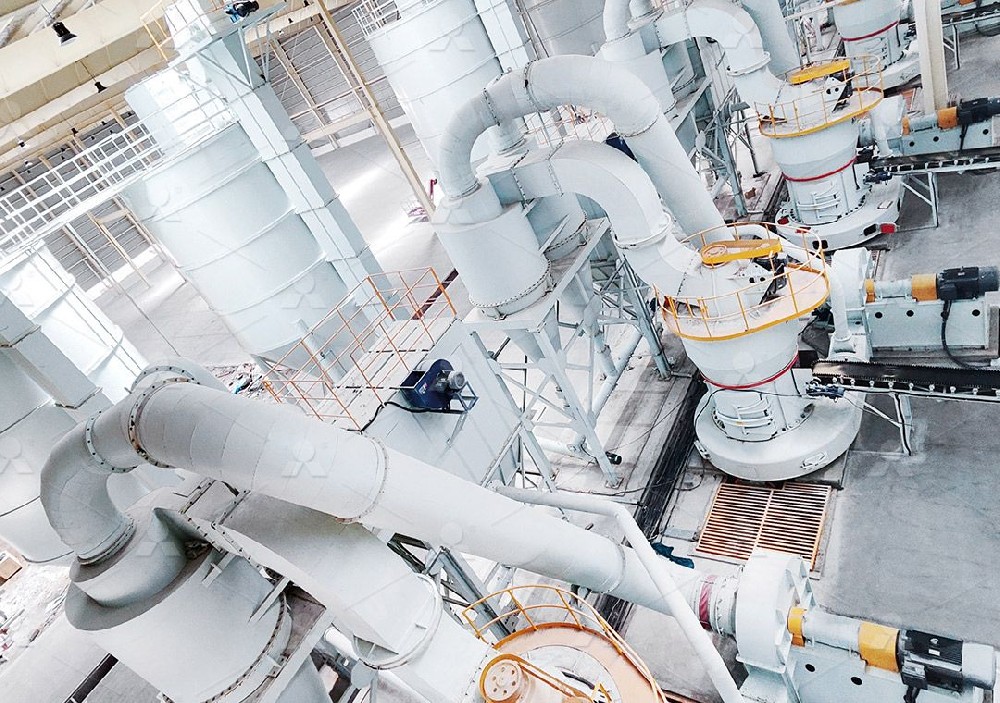
Raymond Mill for Barite Powder Production
The Raymond mill has long been recognized as an efficient and practical solution for grinding barite into fine powder. Its mature design and stable performance make it especially suitable for small to medium-scale barite processing plants supplying oil drilling markets.
Stable Fineness Control
The Raymond mill uses grinding rollers and a ring structure to apply uniform pressure on barite material. This grinding mechanism allows precise adjustment of product fineness, ensuring barite powder consistently meets oil drilling specifications. The integrated classifier helps maintain uniform particle size distribution.
Energy-Efficient Operation
Compared with traditional grinding equipment, Raymond mills operate with relatively low power consumption while maintaining stable output. This efficiency is particularly valuable for producers aiming to control operating costs while supplying large volumes of drilling-grade barite.
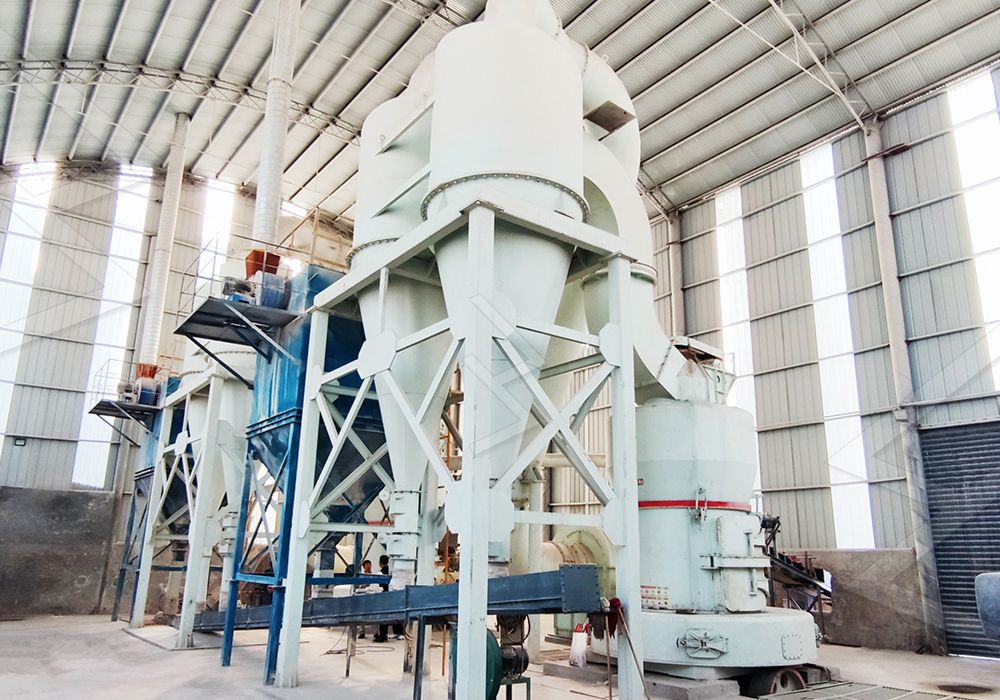
Simple Structure and Easy Maintenance
The Raymond mill features a compact layout and straightforward mechanical design. Wear parts such as rollers and grinding rings are easy to inspect and replace, reducing downtime and maintenance costs. This simplicity makes it a dependable choice for operations seeking stable production with minimal complexity.
Vertical Mill for Large-Scale Barite Grinding
For barite producers targeting higher output and long-term scalability, the vertical grinding mill offers advanced technology and superior performance. Vertical mills integrate crushing, grinding, classification, and conveying into a single system, making them well suited for continuous, large-capacity production.
High Capacity and Continuous Operation
Vertical mills are designed to handle large volumes of material with stable performance. The grinding rollers apply high pressure on the rotating table, efficiently reducing barite particle size while maintaining consistent quality. This makes vertical mills ideal for supplying barite powder to major oil drilling projects in Saudi Arabia.
_1761361296294.jpg)
Improved Energy Efficiency
One of the key advantages of vertical mills is their lower energy consumption per ton of output. The optimized grinding process minimizes over-grinding and improves overall efficiency. Over time, this results in significant cost savings, especially for large-scale barite grinding operations.
Advanced Automation and Control
Modern vertical mills are equipped with automated control systems that monitor operating parameters such as feed rate, pressure, and product fineness. This level of control enhances product consistency, reduces operator workload, and improves overall plant safety.
Liming Heavy Industry Grinding Solutions
Liming Heavy Industry has extensive experience in the development and supply of grinding equipment for non-metallic minerals, including barite. Its Raymond mills and vertical mills are designed to meet the demanding requirements of oil drilling applications, combining reliable performance with long service life.
Liming's grinding solutions are tailored to different production scales and site conditions. Whether supplying a local drilling fluid plant or a large oilfield service operation, Liming's equipment provides flexible configuration options to match capacity, fineness, and operational requirements.
_1761355927036.jpg)
Selecting the Right Barite Grinding Mill
Choosing between a Raymond mill and a vertical mill depends on several factors:
Production capacity: Raymond mills suit small to medium output, while vertical mills are ideal for large-scale production.
Target fineness: Both systems can meet drilling-grade requirements, with vertical mills offering wider adjustment ranges.
Energy considerations: Vertical mills provide higher efficiency for continuous, high-volume operations.
Maintenance strategy: Raymond mills offer simplicity, while vertical mills provide long-term operational stability.
By carefully evaluating these factors, barite producers in Saudi Arabia can select a grinding solution that supports consistent quality, cost control, and long-term competitiveness in the oil drilling market.
Conclusion
Barite grinding is a critical process for oil drilling applications, and equipment selection has a direct impact on product quality and operational efficiency. In Saudi Arabia's demanding oil and gas sector, reliable grinding technology is essential to meet strict industry standards. Liming Heavy Industry's Raymond mills and vertical mills provide proven solutions for barite powder production, offering flexibility for different scales of operation and stable performance under challenging conditions. These grinding systems support efficient barite processing and contribute to the reliable supply of drilling-grade materials.
_1761361296291.jpg)
Frequently Asked Questions
1. What fineness is typically required for barite used in oil drilling?
Barite for drilling fluids is usually ground to 200–325 mesh, depending on industry standards and drilling requirements.
2. Can a Raymond mill meet oil drilling barite specifications?
Yes, Raymond mills are capable of producing drilling-grade barite powder with stable and uniform fineness.
3. When is a vertical mill more suitable for barite grinding?
Vertical mills are preferred for large-scale production where high capacity, energy efficiency, and continuous operation are required.
4. How does grinding quality affect drilling fluid performance?
Consistent particle size helps maintain stable mud density, prevents sedimentation, and improves overall drilling safety.
5. Are these grinding mills suitable for Saudi Arabia's operating conditions?
Yes, both Raymond mills and vertical mills are designed for reliable operation in demanding environments, including high temperatures and continuous production.


