

Industry News
Cement Raw Materials Grinding Mill Supplier for Portland Cement in India
2026-01-15 09:02:23
We are Liming Heavy Industry, a manufacturer of various types of industrial crushers, such as Raymond Mill, Trapezoidal Mill, Vertical Mill, Ultrafine Mill, Ball Mill, etc.
Our mills can process the following minerals:
limestone, quicklime, kaolin, talc, barite, bentonite, calcium carbonate, dolomite, coal, gypsum, clay, carbon black, slag, cement raw materials, cement clinker, etc.
If you need a mill to process stone or minerals into powder, please feel free to contact me (WhatsApp: +86 153 3380 7511). Thank you.
_1761296107304.jpg)
India stands as the second-largest cement producer globally, driven by an unprecedented surge in infrastructure development, urban housing projects, and government initiatives like the PM Gati Shakti National Master Plan. As the demand for high-quality Portland cement continues to climb, Indian cement manufacturers are facing the twin challenges of reducing operational costs and meeting stringent environmental norms. The heart of this production efficiency lies in the raw material grinding stage. Liming Heavy Industry, a world-class supplier of industrial grinding solutions, offers advanced technology through its LM Series Vertical Roller Mills and MTW Series European Type Raymond Mills, specifically engineered to optimize the processing of limestone, clay, and iron ore for the Indian market.
The Strategic Importance of Raw Meal Grinding in India
In the production of Portland cement, raw materials such as limestone, shale, and silica must be ground into a fine "raw meal" before entering the kiln. The quality of this grinding process determines the chemical reactivity of the materials during the clinkerization phase. In India, where limestone quality varies significantly across regions like Rajasthan, Andhra Pradesh, and Madhya Pradesh, having a versatile and robust grinding system is essential. High-efficiency grinding not only ensures better clinker quality but also reduces the specific power consumption (kWh/ton), which is a critical factor for profitability in India's competitive cement landscape.
LM Series Vertical Roller Mill: The Powerhouse for Large-Scale Production
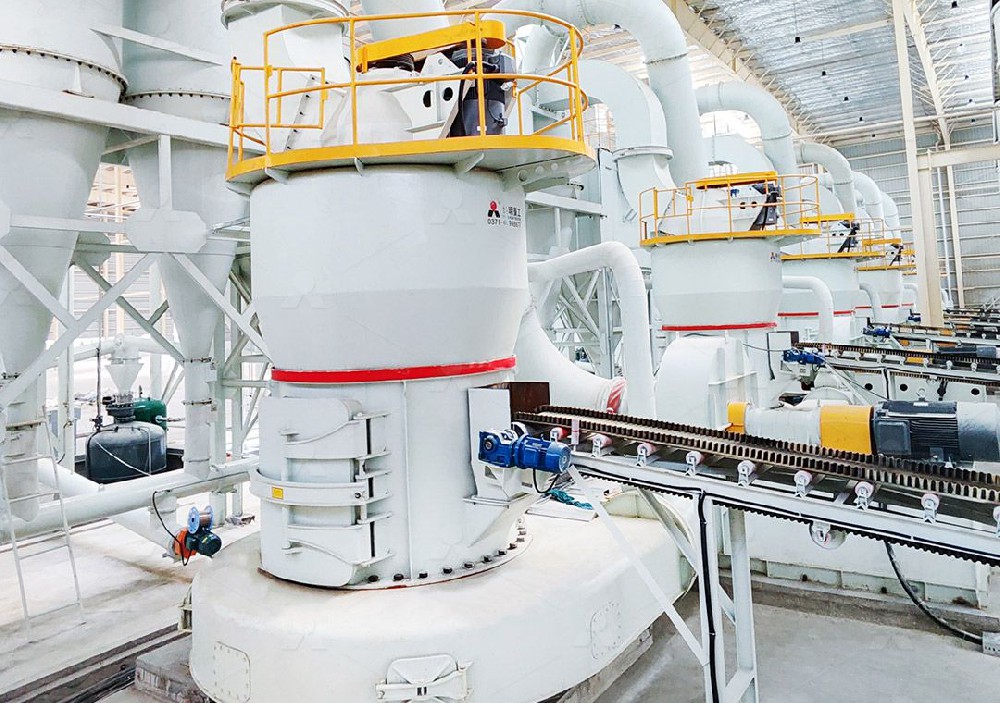
For large-scale cement plants in India requiring high throughput and low energy consumption, the LM Vertical Roller Mill (VRM) from Liming Heavy Industry is the industry standard. Unlike traditional ball mills, which are notorious for high noise levels and energy waste, the LM Series integrates four major functions: crushing, grinding, drying, and classifying into a single, compact unit.
_1767930055775.jpg)
Key Advantages for Indian Cement Plants:
Unmatched Energy Efficiency: The LM Series can save up to 30% to 50% in electricity consumption compared to ball mill systems. This provides a significant competitive edge given the rising industrial electricity tariffs in India.
Handling High Moisture: Indian limestone can often become moist during the monsoon season. The LM mill utilizes hot flue gases from the kiln to dry the material while grinding, handling moisture levels as high as 15% without requiring a separate dryer.
Stable Product Fineness: Equipped with a high-efficiency cage-type classifier, the LM mill ensures a uniform particle size distribution, which leads to more consistent kiln operation and superior clinker quality.
View LM Series Specifications Table (Click to Expand)
| Model | Max Feed Size (mm) | Capacity (T/H) | Product Fineness (mesh) |
|---|---|---|---|
| LM170K | < 42 | 18 - 56 | 170 - 325 |
| LM220K | < 50 | 45 - 120 | 170 - 325 |
| LM240K | < 55 | 60 - 155 | 170 - 325 |
MTW European Type Raymond Mill: Precision for Additives and Fillers
While the LM series handles the bulk of raw meal preparation, the MTW Series European Type Raymond Mill is the preferred choice for grinding mineral additives such as gypsum, high-grade limestone for filler, and coal for the kiln burners. This mill represents an evolution of the traditional Raymond mill, incorporating European design standards for higher stability and productivity.
_1767930055776.jpg)
Innovation in Design:
Integral Bevel Gear Drive: Instead of traditional belt drives that lose power over time, the MTW mill features a direct drive system that increases transmission efficiency by nearly 20%.
Curved Air Duct: This design minimizes air resistance and prevents material accumulation, ensuring a smooth flow of fine particles and reducing internal wear.
Internal Thin Oil Lubrication: This allows the mill to operate 24/7 with minimal downtime, a necessity for Indian plants running continuous production cycles to meet market demand.
Why Choose Liming Heavy Industry as Your Indian Partner?
Choosing a supplier in the Indian cement sector involves more than just comparing machine prices. It requires a partner who understands local conditions and provides long-term value. Liming Heavy Industry offers several benefits that make it a leading choice for Indian cement producers:
_1761361296291.jpg)
1. Compliance with International and Local Standards
Our mills are designed to produce cement raw materials that meet Bureau of Indian Standards (BIS) requirements. Whether you are producing OPC (Ordinary Portland Cement) or PPC (Portland Pozzolana Cement), our technology ensures your raw meal fineness is precisely controlled to achieve the required compressive strength.
2. Low Maintenance and Durable Wear Parts
Downtime in a cement plant is expensive. Liming uses high-chrome alloy materials for grinding rollers and rings, which significantly extends the life of wear parts even when processing abrasive materials. This translates to lower OPEX (Operational Expenditure) over the life of the machine.
3. Comprehensive Environmental Protection
With India tightening its air quality regulations, our grinding systems are designed with advanced pulse dust collectors that ensure a dust-free operation. The noise insulation and vibration-damping systems make our mills suitable for installation near residential zones or environmentally sensitive areas.
_1761355701097.jpg)
Service and Support in the Indian Market
Liming Heavy Industry has established a strong presence in the Indian market, offering end-to-end services. From initial site survey and foundation plan design to installation, commissioning, and operator training, our engineers work alongside your team. We maintain a reliable inventory of core spare parts to ensure that our Indian clients receive prompt assistance, reducing the lead time for maintenance and repairs.
Conclusion
As the Indian construction sector moves towards more sustainable and cost-effective production models, the role of advanced grinding technology cannot be overstated. Liming Heavy Industry provides the perfect synergy of high technology and industrial durability with its LM Vertical Mills and MTW European Type Raymond Mills. By investing in these solutions, Indian cement plants can achieve higher productivity, lower energy consumption, and consistent quality, ensuring they remain at the forefront of the global cement industry.
_1767929649021.jpg)
FAQ: Frequently Asked Questions about Cement Grinding Mills
1. Which mill is better for a new cement plant in India, LM or MTW?
For main raw meal grinding at high capacities, the LM Vertical Roller Mill is superior. For smaller capacities or grinding specific additives like gypsum and coal, the MTW Raymond Mill is often more cost-effective.
2. Can Liming mills process limestone with high moisture?
Yes, the LM series can process materials with up to 15% moisture by integrating hot air into the grinding chamber for simultaneous drying and grinding.
3. How does the electricity consumption of LM mills compare to ball mills?
Typically, the LM series consumes 30-50% less power than a ball mill system for the same output of raw meal, offering a rapid return on investment.
4. What is the typical fineness achieved for raw meal?
For Portland cement, raw meal is usually ground to a fineness of 80 mesh to 200 mesh, which our mills can easily and consistently achieve.
5. Are spare parts for these mills available in India?
Yes, Liming maintains a supply chain for critical spare parts and provides technical service to ensure minimal downtime for Indian customers.
6. What is the lifespan of the grinding rollers?
Depending on the abrasiveness of the limestone, our high-chrome rollers typically last between 8,000 to 12,000 hours of operation.
_1761355927036.jpg)
7. How is the noise level of these mills controlled?
Our mills feature sound-insulating enclosures and vibration-absorbing foundations, making them significantly quieter than traditional pneumatic or ball milling systems.
8. Does Liming provide turnkey solutions for grinding lines?
Yes, we provide the complete line, including the crusher, mill, elevator, feeder, dust collector, and electrical control systems.
9. Can the fineness be adjusted during operation?
Yes, the fineness is controlled by adjusting the speed of the classifier via a VFD (Variable Frequency Drive) from the control panel.
10. Is the MTW mill safe for grinding coal?
Yes, we offer specialized versions of our mills with explosion-proof valves and inert gas systems specifically for safe coal grinding.
11. How long does the installation of a large LM mill take?
On average, installation and commissioning take about 1 to 3 months depending on site readiness and local civil work pace.
12. What data is needed for a quote?
You should provide the material type, Mohs hardness, feed size, required capacity (tons per hour), and the desired final fineness (mesh).


