

Industry News
Gypsum Grinding Mill for Agricultural Lime and Soil Improvement in Egypt
2026-01-14 09:53:19
We are Liming Heavy Industry, a manufacturer of various types of industrial crushers, such as Raymond Mill, Trapezoidal Mill, Vertical Mill, Ultrafine Mill, Ball Mill, etc.
Our mills can process the following minerals:
limestone, quicklime, kaolin, talc, barite, bentonite, calcium carbonate, dolomite, coal, gypsum, clay, carbon black, slag, cement raw materials, cement clinker, etc.
If you need a mill to process stone or minerals into powder, please feel free to contact me (WhatsApp: +86 153 3380 7511). Thank you.
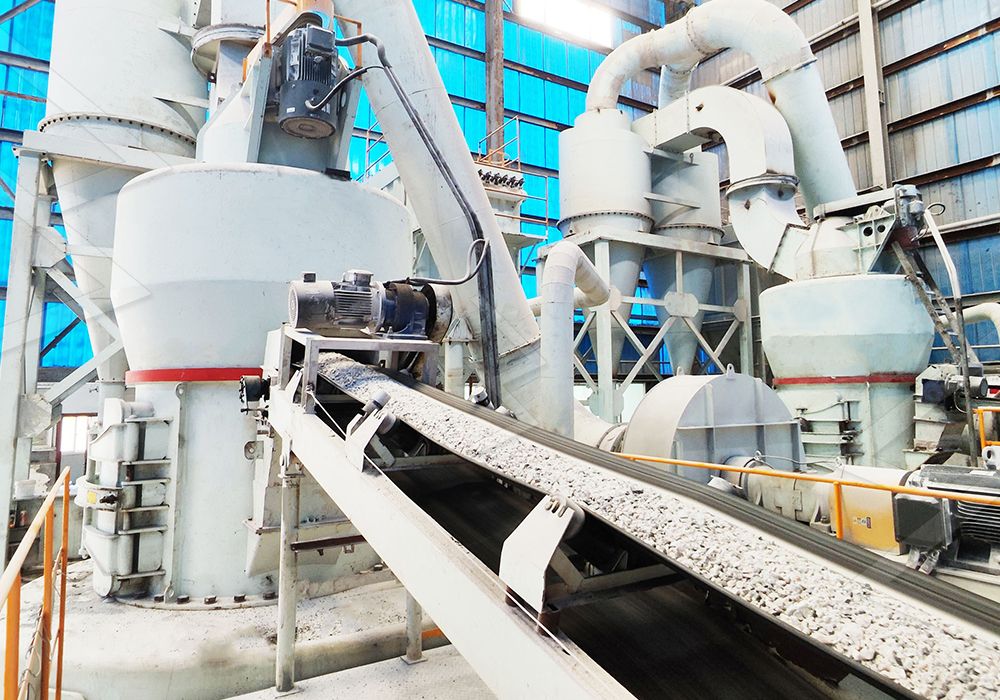
Agricultural production in Egypt relies heavily on soil quality, especially in arid and semi-arid regions where intensive irrigation and long-term cultivation place continuous pressure on land resources. Many farmlands suffer from salinity, sodicity, surface crusting, and poor water infiltration, all of which reduce crop yields and increase production costs. Gypsum has become one of the most widely used soil conditioners to address these issues, thanks to its ability to improve soil structure and balance mineral composition. In order for gypsum to perform effectively in agricultural lime applications and soil improvement, it must be processed into a fine and uniform powder through a reliable grinding system.
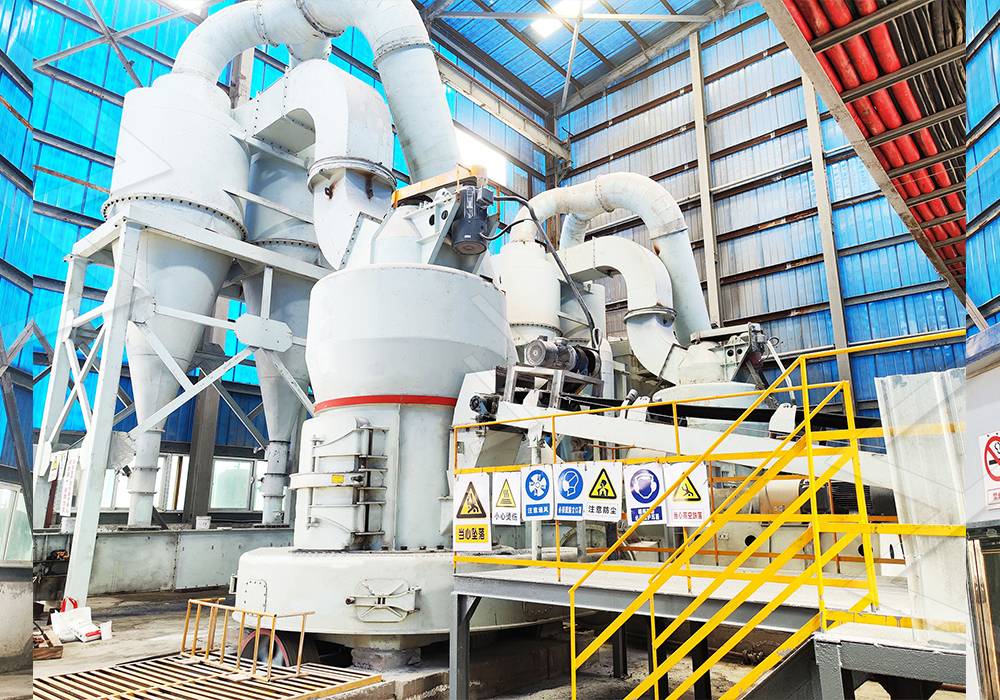
Natural gypsum extracted from Egyptian deposits is usually found in block or coarse granular form. Without proper grinding, its dissolution rate in soil is slow and uneven, limiting its agronomic benefits. Grinding increases the surface area of gypsum particles, allowing calcium ions to react more efficiently with sodium in saline soils and helping sulfur become more available to plants. Fine gypsum powder also ensures uniform distribution during field application, which is essential for large-scale agricultural operations that demand consistent results across wide planting areas.
In many soil improvement programs, gypsum is used together with agricultural lime or applied independently depending on soil test results. Gypsum improves soil aggregation, reduces compaction in heavy clay soils, and enhances permeability, making irrigation more effective. These benefits can only be fully realized when the gypsum powder has stable fineness and minimal impurities. Therefore, the performance of the grinding mill directly influences the quality and effectiveness of the final agricultural product.
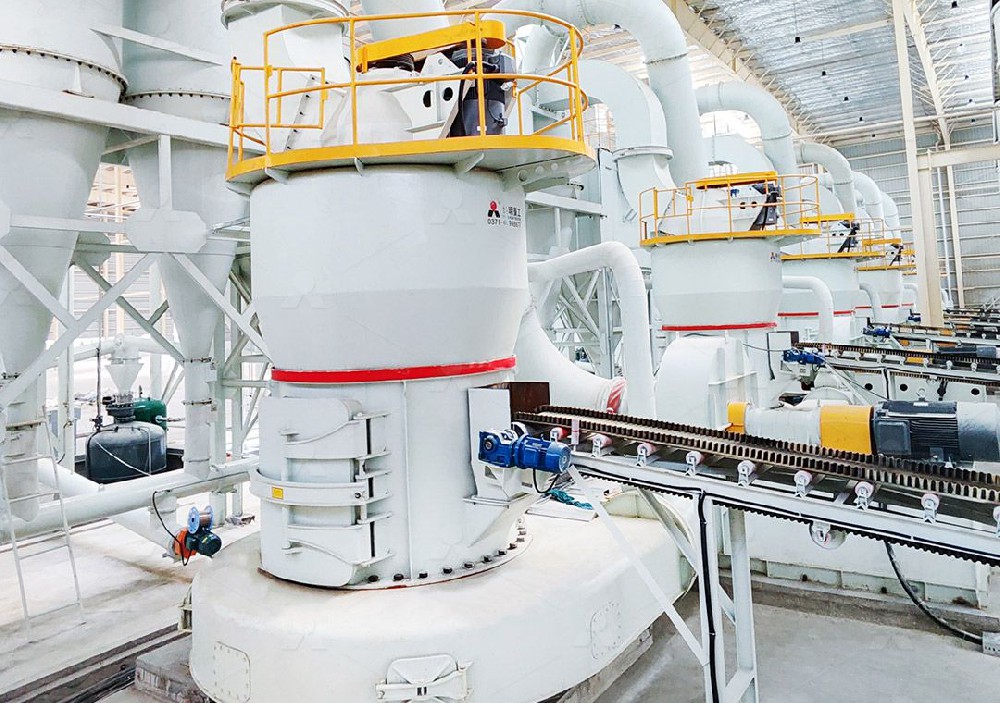
Raymond mills are widely applied in gypsum grinding for agricultural use because of their proven structure and stable operation. The grinding principle allows gypsum to be processed into fine powder with controlled particle size, suitable for soil conditioning and agricultural lime blending. The uniform output produced by a Raymond mill helps ensure predictable soil amendment performance, while its relatively simple maintenance requirements support continuous production during peak agricultural seasons.
For producers aiming at higher output and improved energy efficiency, vertical grinding mills provide an advanced solution. These mills integrate grinding, drying, and classification into one system, allowing gypsum with varying moisture levels to be processed without complex auxiliary equipment. The compact layout reduces installation space, while optimized airflow improves grinding efficiency and lowers power consumption per ton of product. This makes vertical mills particularly suitable for large-scale gypsum processing facilities serving multiple agricultural regions in Egypt.
_1761355927036.jpg)
Liming Heavy Industry offers both Raymond mills and vertical grinding mills designed specifically for non-metallic minerals such as gypsum. The equipment is engineered to deliver consistent fineness, reliable operation, and long service life under demanding working conditions. By focusing on stable performance and ease of maintenance, Liming Heavy Industry grinding solutions help agricultural input producers maintain product quality while controlling operational costs.
Selecting an appropriate gypsum grinding mill involves evaluating raw material characteristics, target fineness, production capacity, and downstream application requirements. A properly matched grinding system enhances the effectiveness of gypsum as a soil amendment, supports sustainable land use, and improves overall agricultural productivity. With suitable milling equipment, Egyptian producers can transform natural gypsum resources into high-value agricultural products that contribute to long-term soil health and food security.
_1761355701094.jpg)
FAQ
Why does gypsum need to be ground before agricultural use?
Grinding increases the surface area of gypsum, allowing it to dissolve faster in soil and react more effectively with sodium and other elements that affect soil structure.What role does gypsum play in soil improvement?
Gypsum helps reduce soil salinity, improves aggregation in clay soils, enhances water infiltration, and supports healthier root development.What particle size is suitable for agricultural gypsum?
Fine and uniform powder is preferred, as it ensures even field application and consistent soil amendment performance.Is a Raymond mill suitable for grinding gypsum for agriculture?
Yes, Raymond mills are well suited for producing fine, uniform gypsum powder with stable output and reliable operation.When should a vertical grinding mill be considered?
Vertical mills are ideal for higher-capacity production, especially when gypsum has variable moisture content and long-term energy efficiency is required.Can gypsum be blended with agricultural lime after grinding?
Yes, finely ground gypsum can be blended with agricultural lime to meet specific soil treatment requirements based on local conditions.How does uniform gypsum powder improve field application?
Uniform particle size allows for even spreading, predictable soil response, and reduced material waste during application.Does moisture content affect gypsum grinding?
Excess moisture can influence grinding efficiency, which is why equipment capable of handling moisture variations is important.What factors should be considered when choosing a gypsum grinding mill?
Raw material properties, required fineness, production capacity, energy consumption, and maintenance needs should all be evaluated.How do Liming Heavy Industry grinding mills support agricultural gypsum production?
Their Raymond and vertical mills provide stable performance, consistent product quality, and durable operation suitable for long-term agricultural applications.


