

Industry News
Dolomite grinding mill for construction aggregate and concrete in Poland
2025-12-15 13:28:02
We are Liming Heavy Industry, a manufacturer of various types of industrial crushers, such as Raymond Mill, Trapezoidal Mill, Vertical Mill, Ultrafine Mill, Ball Mill, etc.
Our mills can process the following minerals:
limestone, quicklime, kaolin, talc, barite, bentonite, calcium carbonate, dolomite, coal, gypsum, clay, carbon black, slag, cement raw materials, cement clinker, etc.
If you need a mill to process stone or minerals into powder, please feel free to contact me (WhatsApp: +86 153 3380 7511). Thank you.
Dolomite has become an essential raw material in Poland's construction and concrete sectors, supported by its stable mineral composition and suitability for aggregates, fillers, and blended cement materials. When ground into different fineness levels, dolomite contributes to improved workability, durable concrete structure, and optimized particle packing. With the rapid growth of infrastructure projects across Poland, the choice of an efficient grinding mill directly affects quality, cost, and production reliability.
Dolomite in Construction and Concrete Applications
Across Poland, dolomite is widely used for concrete aggregates, asphalt mixtures, road sub-base layers, and as a mineral additive in construction materials. Its mechanical strength and relatively low reactivity make it ideal for producing strong, dimensionally stable aggregates. When processed into fine powder, dolomite enhances cementitious mixtures by improving cohesion, reducing water demand, and contributing to better compaction properties.
Polish concrete producers emphasize durability due to exposure to freeze–thaw cycles, de-icing salts, and variable moisture conditions. Consistency in dolomite particle size—whether coarse aggregates or fine powder—is essential to maintain predictable performance. This is why high-quality grinding technology plays a key role in the supply chain.
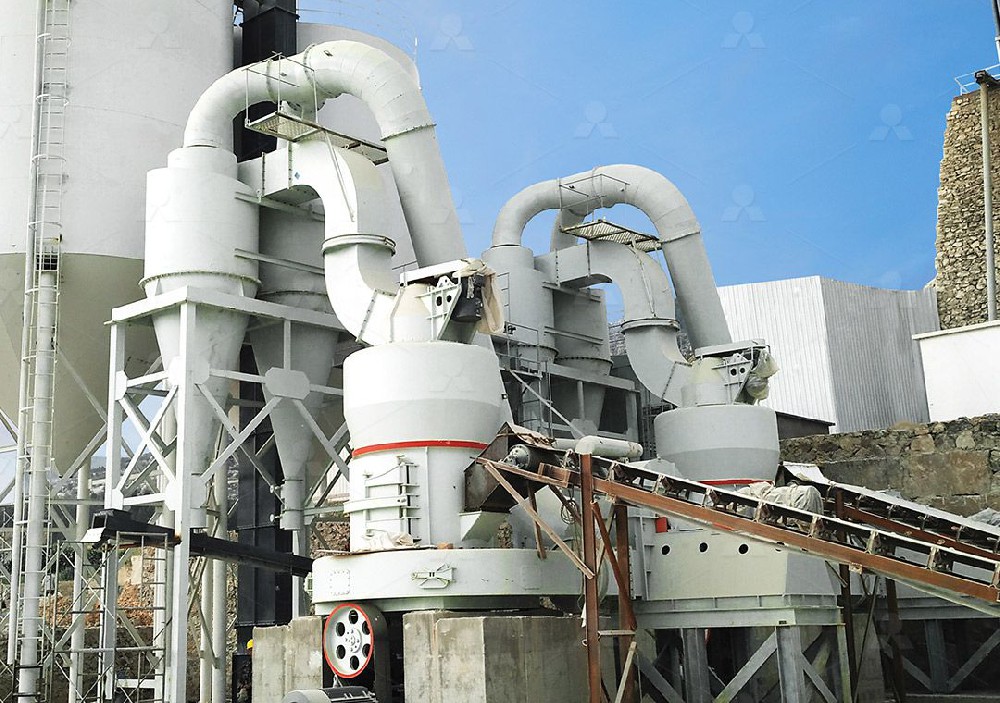
What Makes Dolomite Grinding Effective
Precise fineness control: Different construction uses require specific size ranges, from fine fillers (200–450 mesh) to coarser cement additives.
Stable particle-size distribution: Uniform PSD improves concrete flowability, packing density, and mechanical strength.
Reduced impurities: Grinding systems with good sealing and wear-resistant parts minimize contamination.
Energy-efficient processing: Electricity is a key operating cost, making efficient mills vital for profitability.
Dust reduction: Cleaner, enclosed systems help maintain plant safety and reduce product loss.
Raymond Mill Advantages for Dolomite Powder
Raymond mills have been widely adopted for mineral processing thanks to their simple structure, reliable operation, and strong ability to maintain stable fineness. For dolomite processing in Poland, they offer several operational advantages:
Suitable for medium-scale production with controlled investment cost.
Consistent fineness ideal for filler applications, dry mix mortars, and partial cement replacement.
Low maintenance requirements with an established operating mechanism.
Proven compatibility with minerals of medium hardness such as dolomite.
Producers serving regional ready-mix concrete plants or construction material manufacturers often choose Raymond mills due to their balanced performance and ease of operation.
_1761361296291.jpg)
Vertical Mill Advantages for Large-Scale Dolomite Grinding
Vertical mills (vertical roller mills) have become the preferred choice for high-capacity mineral grinding and modern concrete additive production. For Polish producers who require higher efficiency and integrated processing, vertical mills deliver multiple benefits:
Higher throughput suitable for industrial-scale dolomite powder supply.
Lower power consumption per ton due to optimized grinding mechanisms.
Integrated drying for feedstocks with residual moisture.
Dynamic classifiers for stable and adjustable fineness.
Reduced dust, noise, and environmental impact.
For major construction material suppliers in Poland, vertical mills help ensure consistent and large-volume production, making them ideal for concrete additives and blended cement products.
Why These Mills Are Recommended
Liming Heavy Industry's Raymond mills and vertical mills provide robust grinding solutions for Polish dolomite processors. The Raymond mill offers stable fine-powder production at cost-effective scales, while the vertical mill supports high-efficiency, high-capacity industrial operations. Together, they cover a broad range of production needs and help companies maintain consistent quality for construction aggregates and concrete applications.
These mills are known for their reliability, efficient energy use, and strong adaptability to dolomite's physical properties. Their sealed systems, classifier precision, and durable grinding components contribute to long-term stable operation.
_1761355927036.jpg)
Conclusion
Poland's construction and concrete industries increasingly rely on high-quality dolomite aggregates and powders. Choosing the right grinding equipment—such as Raymond mills for medium-scale production or vertical mills for large-scale industrial grinding—ensures consistent product performance and lower production costs. With rising infrastructure demand, efficient dolomite grinding technology will continue to be essential for the competitiveness of construction material suppliers.
FAQ
1. What fineness is typically required for dolomite powder used in concrete?
Many applications target 200–450 mesh depending on whether the dolomite is used as a filler or a partial cement replacement.
2. Are Raymond mills suitable for dolomite grinding?
Yes. Raymond mills offer stable and cost-efficient grinding for medium-capacity operations where controlled fineness is required.
3. Why choose a vertical mill for dolomite processing?
Vertical mills deliver higher capacity, lower energy consumption, integrated drying, and more precise particle-size control, ideal for large concrete and aggregate producers.
4. Does moisture affect dolomite grinding?
Yes, especially for fine grinding. Vertical mills can dry and grind simultaneously, making them advantageous for dolomite with variable moisture content.
5. How does grinding quality influence concrete performance?
Consistent particle size improves packing density, reduces water demand, and enhances the durability and mechanical strength of concrete.


