

Industry News
How to Build a Complete Limestone Powder Production Line
2025-12-10 09:03:21
We are Liming Heavy Industry, a manufacturer of various types of industrial crushers, such as Raymond Mill, Trapezoidal Mill, Vertical Mill, Ultrafine Mill, Ball Mill, etc.
Our mills can process the following minerals:
limestone, quicklime, kaolin, talc, barite, bentonite, calcium carbonate, dolomite, coal, gypsum, clay, carbon black, slag, cement raw materials, cement clinker, etc.
If you need a mill to process stone or minerals into powder, please feel free to contact me (WhatsApp: +86 153 3380 7511). Thank you.
Building a complete limestone powder production line requires careful planning, precise equipment selection, and a clear understanding of the material’s grinding characteristics. Limestone is widely used in construction materials, paint, desulfurization, plastics, rubber, and cement manufacturing. To meet industrial application standards, limestone must be processed into fine powder with stable particle size, consistent moisture, and reliable purity. A well-designed production line ensures high capacity, low energy consumption, and long-term operational stability.
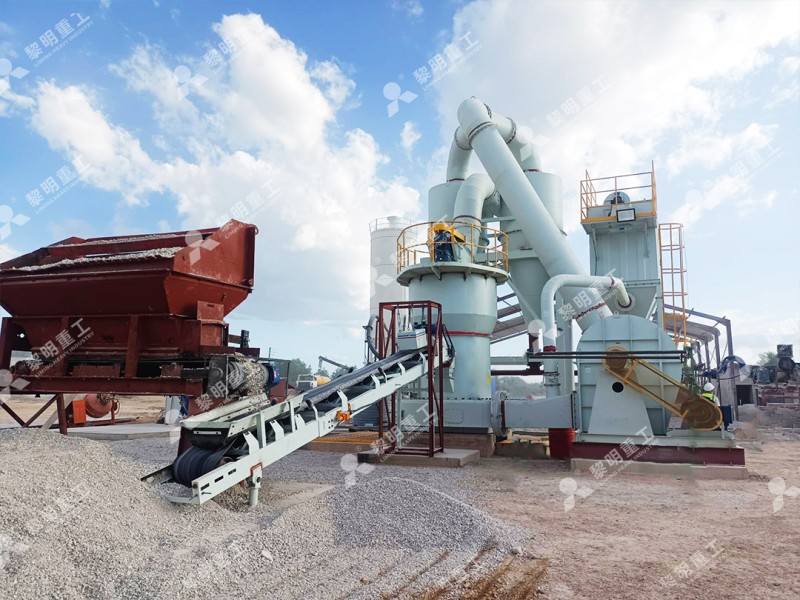
A typical limestone powder production line includes several essential stages: crushing, grinding, powder selection, dust collection, and packaging. The raw limestone blocks are usually large, with varying hardness and moisture content. Therefore, the first step is coarse crushing with a jaw crusher to reduce the material to a manageable size, typically under 30–50 mm, suitable for feeding into a grinding mill.
After crushing, the material enters the grinding stage, which is the core of the entire production line. This step determines the final powder fineness, capacity, and energy consumption. For limestone powder production, two types of grinding equipment are commonly used: Raymond mill and vertical grinding mill. Both options provide stable performance and reliable fine powder processing.
Raymond mill is suitable for small to medium production lines. It uses grinding rollers to compress and grind the limestone against a grinding ring, forming fine powder under the action of the airflow system. Raymond mill provides consistent output and fine particle control and is ideal for producing 80–325 mesh limestone powder. For industries such as wall putty, PVC pipes, waterproof coatings, and simple chemical applications, this equipment delivers stable quality and cost-effective investment. Its compact structure and easy maintenance also make it a widely chosen solution for small plants or investors starting new projects.
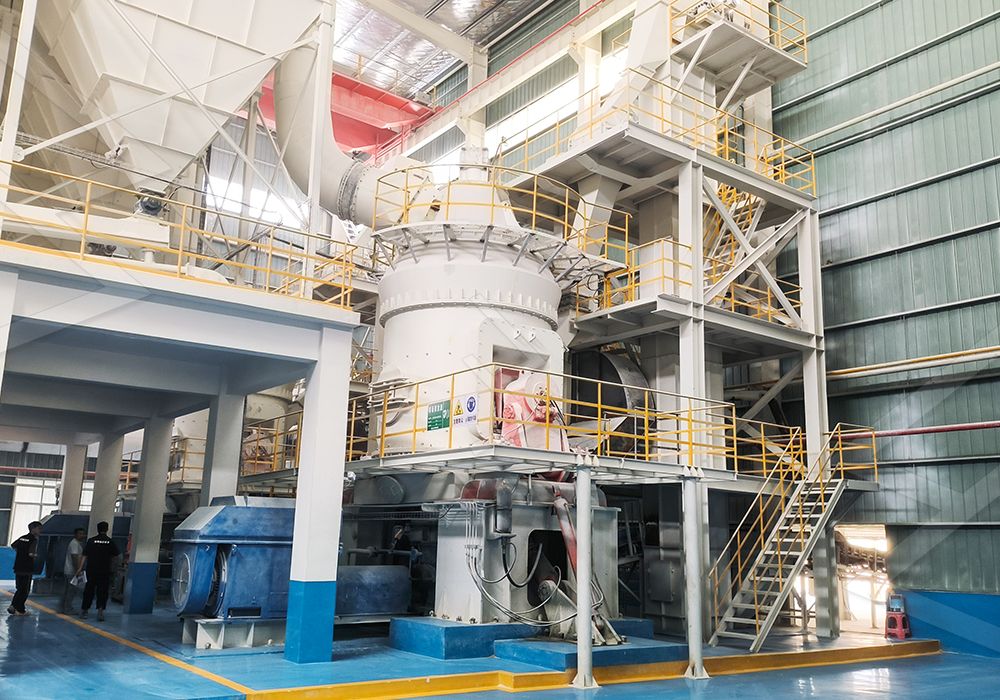
For higher capacity, better product uniformity, and integrated drying capability, vertical grinding mill is a more advanced system. Vertical mill technology integrates grinding, drying, powder selection, and transportation in one unit. This is especially important when processing limestone with higher moisture content or when the production line is located in humid regions. Limestone travels through the grinding table where multiple rollers apply strong pressure, producing fine powder with excellent uniformity. Vertical mills can produce fine powder from 80 mesh up to 400 mesh, covering the needs of power plant desulfurization, high-grade building materials, and large-scale industrial applications.
Vertical mills are also known for their energy efficiency. Compared with traditional ball mills, energy consumption can be reduced by 30–50%. The system’s intelligent control and stable operation allow continuous 24-hour production. For large limestone grinding projects requiring high throughput, vertical mills significantly lower long-term production costs.
The powder selection system plays an essential role in controlling final product quality. High-efficiency classifiers can accurately separate fine and coarse particles, ensuring the finished powder meets specific requirements for mesh size or micron levels. The return material is automatically sent back to the grinding chamber for further processing, which improves overall system efficiency.
_1761355927036.jpg)
Dust collection is another critical component. A complete limestone production line must operate under strict environmental standards. Pulse dust collectors or bag filters ensure clean operation and compliance with air quality regulations. Good dust collection also protects equipment from excessive wear and helps maintain a clean workshop environment.
After grinding and powder collection, the finished limestone powder enters the storage or packaging system. Depending on the customer’s needs, the powder can be packaged in bags or loaded into bulk tankers. Stable powder quality and controlled moisture are essential to ensure smooth storage and transportation.
Liming Heavy Industry provides complete solutions for limestone powder production, offering Raymond mills and vertical mills designed for stable and efficient operation. These machines are built with durable components, high-precision classifiers, and optimized airflow systems. The grinding technology ensures high output, uniform particle size, and long service life. With decades of experience and global project cooperation, Liming Heavy Industry supports customers with customized production line plans, installation guidance, and operation training, ensuring reliable long-term performance.
_1761361296291.jpg)
A complete limestone powder production line should be built with careful attention to capacity requirements, desired fineness, site layout, environmental standards, and overall investment budget. Raymond mills are well-suited for small and medium-scale operations, while vertical mills are ideal for large, energy-efficient, industrial-grade production. Choosing the right equipment ensures that the production line achieves high productivity, stable quality, and low operating costs.
FAQ
1. What fineness range is commonly required for limestone powder?
Most applications require 80–325 mesh, while desulfurization and special industrial uses may require up to 400 mesh.
2. Which mill is better for small limestone powder plants?
Raymond mill is ideal for small and medium projects due to its simple structure, low investment, and stable output.
3. What are the advantages of using a vertical mill for limestone?
Vertical mills offer higher capacity, better moisture handling, integrated drying, lower energy consumption, and more uniform powder.
_1761355701097.jpg)
4. Can one production line process different types of limestone?
Yes. Both Raymond and vertical mills can process various limestone types as long as hardness and moisture are within equipment limits.
5. Is dust collection necessary for limestone grinding?
Yes. Dust collectors ensure environmental compliance, protect equipment, and maintain clean operation.
6. How do I choose the right grinding mill?
Selection depends on required capacity, fineness, moisture content, and budget.
7. Why choose Liming Heavy Industry for limestone grinding equipment?
The company provides reliable Raymond mills and vertical mills with long service life, high efficiency, and complete production line solutions.
8. Can these mills operate continuously for large industrial projects?
Yes. Both types of mills are designed for stable 24-hour industrial operation.


