

Industry News
Optimizing Kaolin Grinding for Thailand's Ceramic and Porcelain Industry
2026-01-21 08:42:56
We are Liming Heavy Industry, a manufacturer of various types of industrial crushers, such as Raymond Mill, Trapezoidal Mill, Vertical Mill, Ultrafine Mill, Ball Mill, etc.
Our mills can process the following minerals:
limestone, quicklime, kaolin, talc, barite, bentonite, calcium carbonate, dolomite, coal, gypsum, clay, carbon black, slag, cement raw materials, cement clinker, etc.
If you need a mill to process stone or minerals into powder, please feel free to contact me (WhatsApp: +86 153 3380 7511). Thank you.
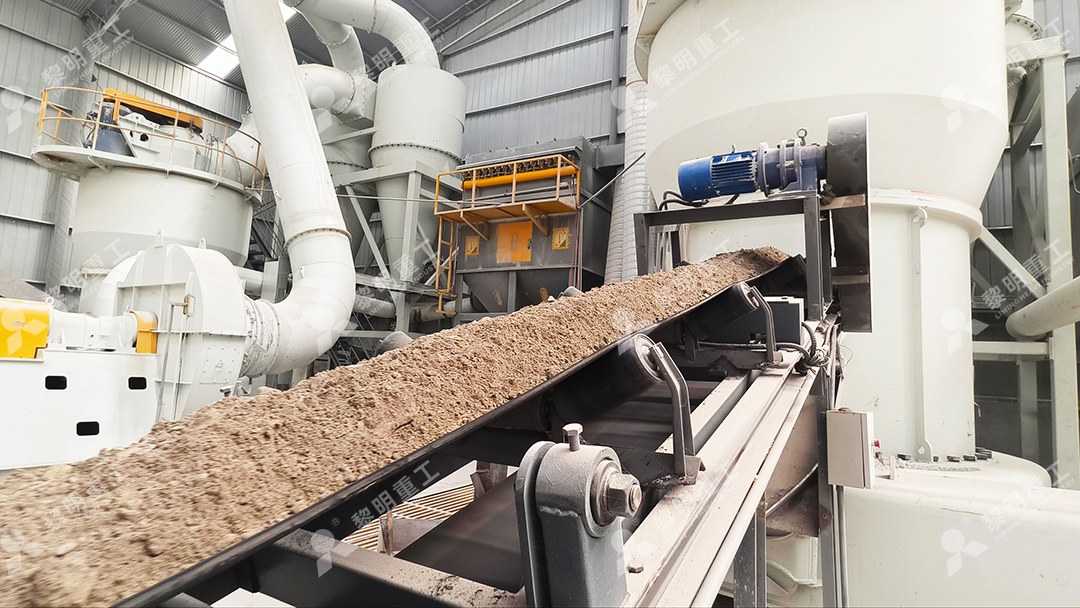
Thailand has long been a global hub for high-quality ceramics, with regions like Lampang and Samut Prakan hosting world-class production facilities for sanitary ware, tableware, and porcelain insulators. Central to this industry is Kaolin (China Clay), a mineral prized for its plasticity and firing characteristics. To transform raw kaolin into a fine, white powder suitable for porcelain, choosing a reliable and cost-effective grinding supplier is essential. Liming Heavy Industry has established itself as a leading provider in Southeast Asia, offering the MTW European Type Raymond Mill and the LUM Ultrafine Vertical Roller Mill as the primary solutions for Thai manufacturers.
In the competitive Thai market, "cheapest" does not simply mean the lowest purchase price; it refers to the lowest Total Cost of Ownership (TCO). This includes energy efficiency, durability of wear parts in abrasive conditions, and the ability to produce high-brightness, low-impurity powder that commands a premium price in the export market.
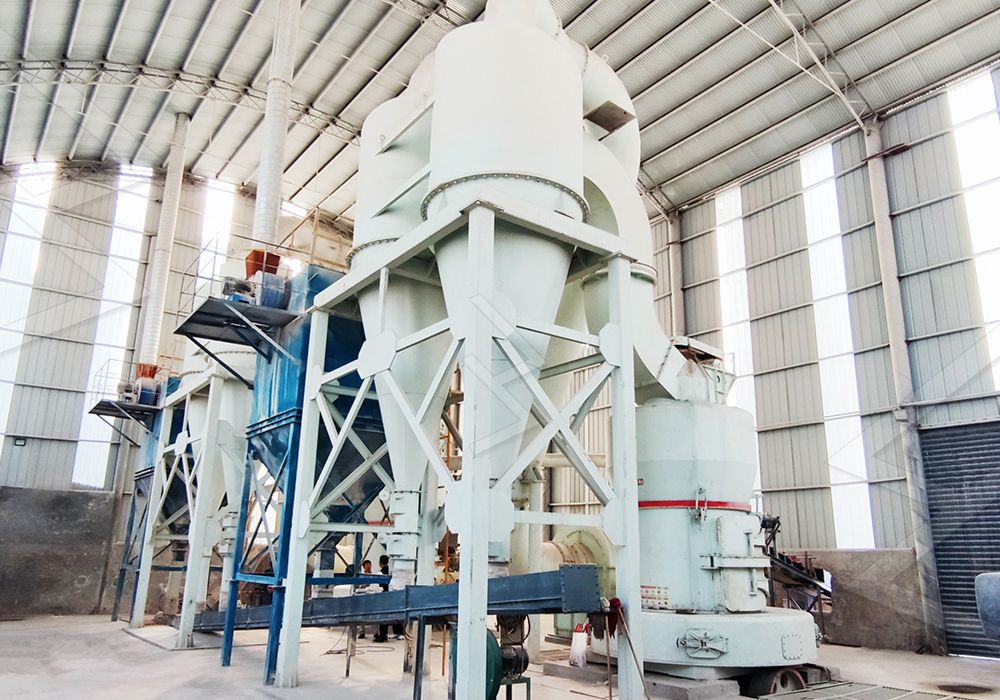
High-Performance Kaolin Grinding: Raymond Mill vs. Vertical Roller Mill
For kaolin processing in Thailand, the choice typically falls between the upgraded Raymond Mill for general ceramic grade powder and the Vertical Roller Mill for ultra-fine, high-end porcelain applications.
1. MTW European Type Raymond Mill: The Efficiency Specialist
The MTW series is the most cost-effective solution for Thai ceramic plants requiring fineness between 200 and 425 mesh. It surpasses traditional Raymond mills through several key innovations:
High Passing Rate: Liming's MTW mill achieves a passing ratio of up to 99%, ensuring almost no waste of raw kaolin—a critical factor for profitability in Lampang's clay processing clusters.
Bevel Gear Drive: By replacing traditional belt drives with an integrated bevel gear system, energy loss is minimized, resulting in significantly lower electricity costs per ton of powder.
Lower Maintenance: The thin-oil lubrication system allows for longer service intervals compared to grease-lubricated mills, which is vital for continuous production during Thailand's peak manufacturing seasons.
_1767930326613.jpg)
2. LUM Ultrafine Vertical Roller Mill: The Quality Leader
For the production of premium porcelain and specialized bone china, particle size must be much finer—often reaching 1250 mesh or higher. The LUM Vertical Roller Mill is designed for these high-specification requirements:
Superior Whiteness Preservation: The grinding principle of the LUM mill reduces iron contamination from wear parts, which is essential for maintaining the "super white" quality expected of Thai porcelain.
Integrated Classification: The multi-head classifier allows for precise control over the particle size distribution (PSD), ensuring the kaolin provides the exact shrinkage and strength characteristics needed during kiln firing.
Large Scale Economics: While the initial investment is higher, the LUM mill handles massive capacities (up to 18 tons/hour for ultrafine powder), making it the "cheapest" option per ton for large-scale industrial suppliers.
_1761361296294.jpg)
Technical Specifications & Comparison
The following table outlines the performance metrics of Liming's flagship mills for kaolin processing in the Thai market.
| Parameter | MTW European Raymond Mill | LUM Ultrafine Vertical Mill |
|---|---|---|
| Application Grade | Standard Ceramic / Sanitary Ware | High-end Porcelain / Paper Filler |
| Output Fineness | 1.6 – 0.045 mm (up to 425 mesh) | 0.045 – 0.005 mm (up to 2500 mesh) |
| Capacity (t/h) | 3 – 50 TPH | 5 – 18 TPH (at ultrafine levels) |
| Hardness Limit | Mohs Hardness < 9.3 | Mohs Hardness < 7 |
| Price Position | Mid-range / High ROI | High-end / Industrial Scale |
| Main Benefit | Low power consumption per ton | Excellent particle shape and purity |
_1761355927036.jpg)
Strategic Advantages for the Thailand Market
Liming Heavy Industry has tailored its offerings to meet the specific economic and environmental conditions of Thailand:
Localized Parts Supply: Recognizing the importance of the Thai ceramic industry, Liming ensures that common wear parts (rollers, rings, and shovels) are readily available to minimize downtime.
Climate-Ready Design: The cooling and lubrication systems of the MTW and LUM series are optimized for Thailand's tropical climate, preventing overheating during the hot season.
Environmental Compliance: Thailand's Ministry of Industry has strict dust emission standards. Liming mills utilize high-efficiency pulse bag filters and a closed-loop airflow system to ensure a dust-free workshop environment.
Frequently Asked Questions (FAQ)
1. Is a Raymond Mill or Vertical Roller Mill better for Thailand's small-scale ceramic workshops?
For small-to-medium workshops, the MTW Raymond Mill is recommended. It has a smaller footprint, lower initial investment, and is easier for a small team to operate while still providing the necessary fineness for standard ceramic products.
2. How does the LUM mill improve the quality of porcelain?
The LUM mill produces "spherical-like" particles and avoids over-grinding. This improves the flowability of the clay slip and the transparency of the final fired porcelain, which is a major quality indicator for Thai exporters.
3. What is the typical lead time for delivery to Thailand?
Due to the proximity of our manufacturing bases to Southeast Asia, standard configurations of the MTW and LUM mills can typically be delivered and installed in Thailand within 4 to 8 weeks.
4. Can these mills handle the moisture in Thai "washed" kaolin?
Yes. Both mills can be integrated with a hot air system. However, the Vertical Roller Mill (LUM) is more efficient at drying and grinding simultaneously if the input moisture is above 5%.
_1761355701097.jpg)
5. Why is Liming considered a "cheapest" supplier despite not having the lowest sticker price?
Liming focuses on operational savings. Our mills use roughly 20-30% less electricity than older ball mills or low-quality local copies. Over 5 years of operation, the energy savings often exceed the original cost of the machine.
6. What fineness is required for sanitary ware production in Thailand?
Most Thai sanitary ware manufacturers require kaolin ground to 325 mesh (45 microns). The MTW138 or MTW175 models are the most popular choices for this specific application.
7. Does Liming provide installation and training for Thai workers?
Yes, we provide on-site installation by experienced engineers and comprehensive training in Thai/English to ensure your local team can maintain the equipment efficiently.
8. Are there explosion-proof options for these mills?
While kaolin is non-explosive, if your facility processes other materials like coal or sulfur, Liming can configure the mills with explosion-proof motors and specialized venting systems to meet safety regulations.


