

Industry News
Benefits of using vertical mills for fine powder grinding
2026-01-09 15:40:55
We are Liming Heavy Industry, a manufacturer of various types of industrial crushers, such as Raymond Mill, Trapezoidal Mill, Vertical Mill, Ultrafine Mill, Ball Mill, etc.
Our mills can process the following minerals:
limestone, quicklime, kaolin, talc, barite, bentonite, calcium carbonate, dolomite, coal, gypsum, clay, carbon black, slag, cement raw materials, cement clinker, etc.
If you need a mill to process stone or minerals into powder, please feel free to contact me (WhatsApp: +86 153 3380 7511). Thank you.
Benefits of Using Vertical Mills for Fine Powder Grinding: A Deep Dive into High-Efficiency Ultra-Fine Production
In the modern industrial landscape, the demand for high-purity, ultra-fine powders is skyrocketing. From pharmaceutical additives to high-grade construction materials and sleek cosmetic bases, the quality of the final product is often dictated by the precision of the grinding process. Traditional milling methods, while reliable for decades, are increasingly being outpaced by the technological advancements of vertical mills. Equipment like the LUM Ultrafine Vertical Grinding Mill and the LM Vertical Mill have redefined what is possible in terms of efficiency, fineness, and environmental sustainability.
This article explores the technical advantages and operational benefits of incorporating advanced vertical milling technology into your production line, referencing leading industry standards for performance and reliability.
1. Superior Grinding Efficiency and Yield
One of the primary benefits of vertical mills is their ability to produce a higher yield with significantly lower energy consumption. For instance, the newly designed grinding curves of the rollers and rings in our MW Ultrafine Grinding Mill enhance grinding efficiency to the point where production capacity is 40% higher than jet grinding mills or stirred mills. When compared to the traditional ball mill, the yield can be twice as large under the same power conditions.
The secret lies in the material bed grinding principle. In systems like the LUM Ultrafine Vertical Grinding Mill, materials move from the center to the edge of the millstone under centrifugal force. As they pass through the grinding zone, they are crushed not just by the roller itself, but also through inter-granule friction within the material bed. This reduces the "over-grinding" phenomenon found in other systems, ensuring a higher rate of finished products in a single pass.
2. Unmatched Precision in Particle Size Control
For industries requiring powder fineness between 325 and 2500 meshes, vertical mills offer unparalleled control. Modern vertical mills utilize advanced German and Taiwan-inspired powder separation technologies. The MW Ultrafine Grinding Mill features a cage-type powder selector that enables the screening rate to achieve d97 ≤ 5μm in a single cycle.
The LUM series takes this a step further with multi-head powder separating technology controlled by PLC systems. This allows operators to switch between different production demands rapidly. By adjusting the rotating speed of the rotor in the powder concentrator, the fineness can be finely tuned to meet the most stringent laboratory or industrial specifications.
3. Compact Footprint and Low Investment Costs
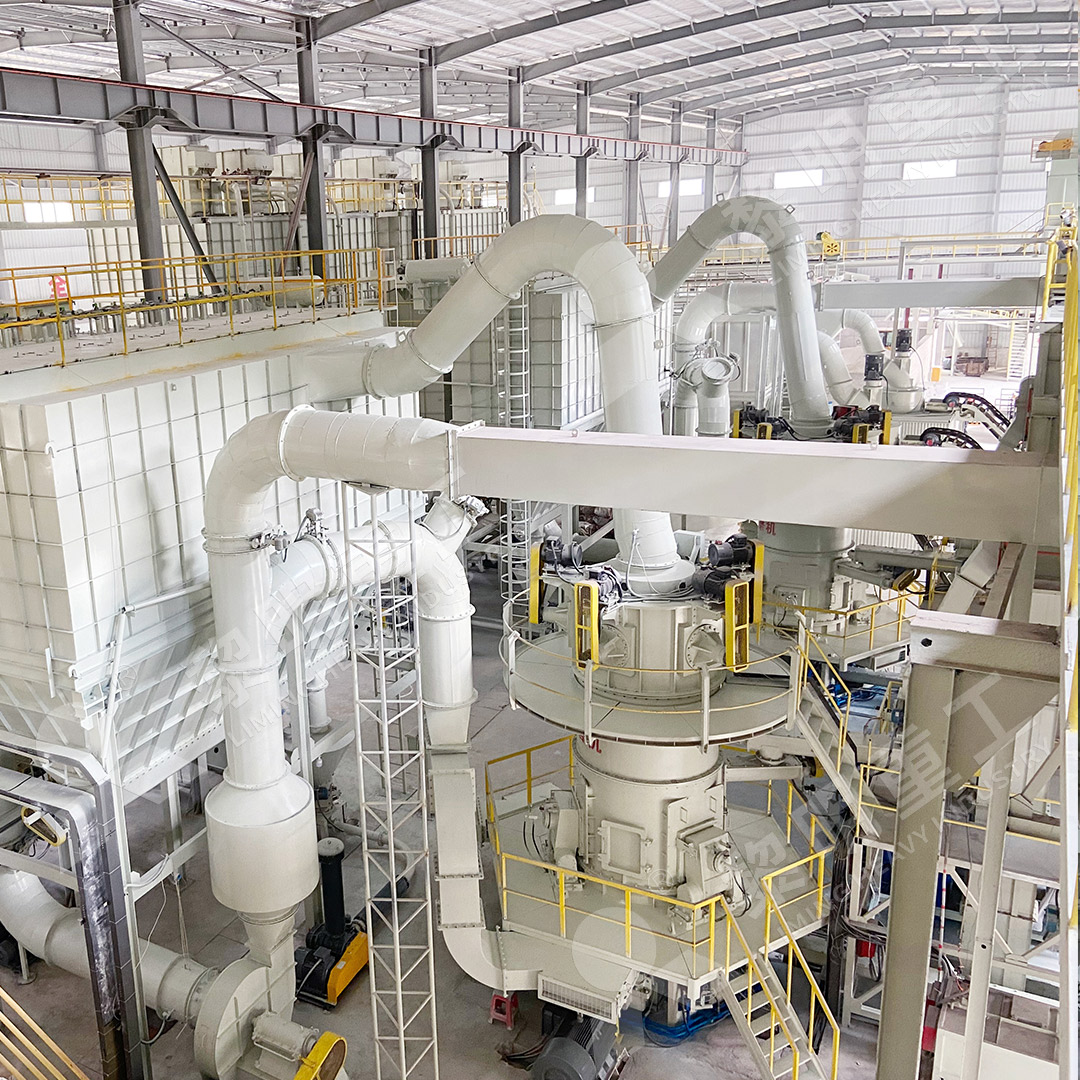
One of the logistical hurdles of setting up a grinding plant is the required real estate. Traditional ball milling systems are notorious for their large footprints. In contrast, the LM Vertical Grinding Mill integrates crushing, drying, grinding, classifying, and conveying into a single unit. This integration reduces the coverage area by 50% compared to ball mills.
Furthermore, because these machines can often be arranged outdoors due to their sealed and robust design, infrastructure investment is minimized. The system effectively replaces a battery of separate machines with one streamlined vertical tower, simplifying the plant layout and reducing construction costs.
_1767930055774.jpg)
4. Operational Stability and Ease of Maintenance
Industrial reliability is non-negotiable for 24-hour operations. Many of our ultrafine mills, such as the MW series, are designed with no rolling bearings or screws in the grinding chamber. This eliminates the risk of machine damage caused by loose screws or bearing seal failures. Furthermore, lubrication systems are often positioned externally, allowing for maintenance without shutting down the equipment.
To prevent the mechanical catastrophic failure that can occur from intense vibration, the LUM Ultrafine Vertical Grinding Mill employs double position-limiting technology. This ensures the grinding roller never makes direct, destructive contact with the millstone. When maintenance is finally required, the "reversible structure" allows rollers to be turned out of the machine body easily, reducing downtime from days to hours.
5. Environmental Stewardship: Noise and Dust Control
Modern environmental standards, such as the national protection standards, require rigorous dust and noise mitigation. Vertical mills excel here because they operate under negative pressure. In an LM Vertical Slag Mill or a MTW-Z European Trapezium Mill, the entire system is sealed, ensuring no dust spills into the factory environment.
Key eco-friendly features include:
Efficient Pulse Dust Collectors: Capturing even the finest particles before air is exhausted.
Mufflers and Soundproof Rooms: Reducing the acoustic footprint of the powerful motors and grinding action.
Low Vibration: Elastic volute damping structures, as seen in the MTW-Z series, minimize the structural noise transmitted through the floor.
_1767930055775.jpg)
6. Versatility Across Applications
Whether you are processing non-metallic minerals like limestone, calcite, and talc, or industrial by-products like slag and pulverized coal, there is a vertical mill tailored for the task. The LM Vertical Slag Mill, for instance, focuses specifically on the recycling of steel slag, while the MTW-Z European Trapezium Mill is the intelligent choice for diverse minerals with its maintenance-free dilute oil lubrication system.
_1767930055776.jpg)
Conclusion
The transition from traditional grinding to vertical milling is more than just an equipment upgrade; it is a strategic move toward higher profitability and lower environmental impact. With digitalized processing ensuring the precision of every core part and a secure supply of genuine spare parts, the decision to implement vertical technology—whether through the LUM, LM, or MTW-Z series—guarantees a competitive edge in the ultra-fine powder market.
Frequently Asked Questions (FAQ)
Q1: What is the maximum input size for an LM Vertical Grinding Mill?
A: The LM Vertical Grinding Mill can handle an input size ranging from 0 to 70 mm, depending on the specific model and material type.
Q2: How does the energy consumption of a vertical mill compare to a jet mill?
A: The system energy consumption of our vertical mills, like the MW Ultrafine Grinding Mill, is typically only about 30% of that of a jet grinding mill for the same fineness.
Q3: Can the fineness of the powder be adjusted during operation?
A: Yes. By using a PLC control system and adjusting the rotating speed of the powder concentrator rotor, researchers and operators can adjust the fineness between 325 and 2500 meshes once the system is calibrated.
Q4: Why is there no direct contact between the roller and the millstone in LUM mills?
A: This is a protective feature called electronic and mechanical limiting technology. It prevents vibration damage and ensures that the machine does not self-destruct if the material feed is interrupted or if there are external vibrations.
Q5: Are these mills suitable for processing abrasive materials like slag?
A: Absolutely. The LM Vertical Slag Mill is specifically designed with high-performance wear-resistant materials and a unique grinding structure to handle the abrasive nature of industrial slag and water slag.
Q6: How is dust handled in the vertical milling system?
A: The system operates under negative pressure, and is equipped with a high-efficiency pulse dust collector. This ensures that the air is purified before it is discharged, meeting national environmental protection standards.
Q7: Is it possible to lubricate the machine without stopping production?
A: Yes, in several models like the MW Ultrafine Mill, the lubricating device is installed outside the main shaft, enabling external lubrication and 24-hour continuous production.


